MCQ
In Young's interference experiment, if the slits are of unequal width, then:
  • A
    No fringes will be formed
  • B
    The positions of minimum intensity will not be completely dark.
  • C
    Bright fringe as displaced from the original central position.
  • D
    Distance between two consecutive dark fringes will not be equal to the distance between two consecutive right fringes.
Answer

  1. The positions of minimum intensity will not be completely dark.

Explanation:

Unequal width of slits will cause unequal intensity of lights entering from both slits.

As a result, during interference complete cancelling of light intensity will not take place at regions of otherwise dark fringe.

As the value of $\beta$ does not depend on intensity of light, there will be no shifting of fringes as well as no change in fringe width.

Need a full question paper?

Generate a complete, print-ready paper with questions like this in minutes — across 16+ boards, with answer keys.

Start Generating Free

Similar questions

A positively charged particle is released from rest in an uniform electric field. The electric potential energy of the charge:

Which of the following is dependent on the intensity of incident radiation in a photoelectric experiment

(a) Work function of the surface

(b) Amount of photoelectric current

(c) Stopping potential will be reduced

(d) Maximum kinetic energy of photoelectrons

Find out the minimum energy required to take out the only one electron from the ground state of Li+?

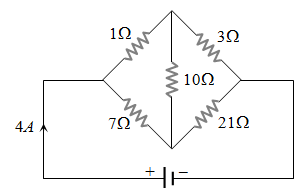
In the circuit shown in figure, the current drawn from the battery is 4A.  If 10 W resistor is replaced by 20 W resistor, then current drawn from the circuit will be

(a) 1 A

(b) 2 A

(c) 3 A

(d) 0 A

The capacity of a parallel plate condenser is C. Its capacity when the separation between the plates is halved will be

(a) 4 C     

(b) 2C

(c)   

(d)    

Assertion  :   The earth’s magnetic field is due to iron present in its core.

Reason      : At a high temperature magnet losses its magnetic property or magnetism.

(a) If both assertion and reason are true and the reason is the correct explanation of the assertion.

(b) If both assertion and reason are true but reason is not the correct explanation of the assertion.

(c) If assertion is true but reason is false.

(d) If assertion is false but reason is true.

The plates of a parallel plate capacitor of capacity 50 μC are charged to a potential of 100  volts and then separated from each other so that the distance between them is doubled. How much is the energy spent in doing so

(a) 25  

(b) -12.5  

(c) -25  

(d) 12.5  

Newton postulated his corpuscular theory of light on the basis of:

The magnet of a vibration magnetometer is heated so as to reduce its magnetic moment by 19%. By doing this the periodic time of the magnetometer will

(a) Increase by 19%

(b) Decrease by 19%

(c) Increase by 11%

(d) Decrease by 21%

In order to increase the angular magnification of a simple microscope, one should increase: