MCQ
Indentify the product.

- A
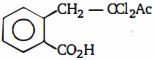
- B
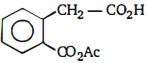
- ✓
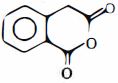
- D
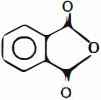
Generate a complete, print-ready paper with questions like this in minutes — across 16+ boards, with answer keys.
$\operatorname{cis}-\left[\mathrm{Cr}(\mathrm{ox})_2 \mathrm{Cl}_2\right]^{3-},\left[\mathrm{Co}(\mathrm{en})_3\right]^{3+}$
$\operatorname{cis}-\left[\mathrm{Pt}(\mathrm{en})_2 \mathrm{Cl}_2\right]^{2+}, \text { cis }-\left[\mathrm{Co}(\mathrm{en})_2 \mathrm{Cl}_2\right]^{+}$
$\text {trans }-\left[\mathrm{Pt}(\mathrm{en})_2 \mathrm{Cl}_2\right]^{2+}, \text { trans }-\left[\mathrm{Cr}(\mathrm{ox})_2 \mathrm{Cl}_2\right]^{3-}$
Statement $I$: The boiling point of hydrides of Group $16$ elements follow the order
$\mathrm{H}_2 \mathrm{O}>\mathrm{H}_2 \mathrm{Te}>\mathrm{H}_2 \mathrm{Se}>\mathrm{H}_2 \mathrm{~S}$.
Statement $II$: On the basis of molecular mass, $\mathrm{H}_2 \mathrm{O}$ is expected to have lower boiling point than the othe members of the group but due to the presence of extensive $\mathrm{H}$-bonding in $\mathrm{H}_2 \mathrm{O}$, it has higher boiling point.
In the light of the above statements, choose the correct answer from the options given below: