Question
Indicate the number of unpaired electrons in:
Si.

Need a full question paper?

Generate a complete, print-ready paper with questions like this in minutes — across 16+ boards, with answer keys.

Start Generating Free

Similar questions

  1. Which of the following have identical bond order?

$\text{CN}^-,\text{NO}^-,\text{O}^-_2,\text{O}^{2-}_2$

  1. Which of the following attain the linear structure?

$\text{BeCl}_2,\text{NCO}^+,\text{NO}_2,\text{CS}_2$

Name the organic products of the reaction of but-2-ene with each of the following reagents and write a balanced equation for each reaction.
  1. Hydrogen bromide.
  2. Bromine dissolved in tetrachloromethane.
  1. Write the functions of salt bridge in electro chemical cell.
  2. Give one decomposition reaction which is redox reaction and one which is a redox reaction.
Calculate the mole fraction of $20 \%$ (w/w) ethylene glycol $\left( C _2 H _6 O _2\right)$ (Molar mass of $C _2 H _6 O _2=62$ )
  1. Which of the following are isostructural species. Give their structures.

$\text{NO}^+_2,\text{BCl}_3,\text{CO}_2,\text{BeCl}_2$

  1. Which has most electronegativity of carbon? Why?

$\text{CH}_3-\text{CH}_3,\text{CH}=\text{CH}_2,\text{HC}\equiv\text{CH}$

Explain why?
  1. Reaction of $\text{FeSO}_4+\text{Cu}\xrightarrow{ \ \ \ \ \ }\text{CuSO}_4\text{(aq)}+\text{Fe}$ does not occur.
  1. Zinc can displace Cu from aqueous CuSo4 solution but Ag cannot.
  2. Solution of AgNO3 turns blue when Cu rod dipped in it.
Give IUPAC name of the following:

  1.  

$\ \ \ \ \ \ \ \ \ \ \ \ \stackrel{8\ \ \ \ }{\text{CH}_2}-\stackrel{9\ \ \ \ }{\text{CH}_3}\ \ \ \ \ \ \ \ \ \ \ \ \ \text{CH}_3\ \ \ \text{CH}_2-\text{CH}_3\\\ \ \ \ \ \ \ \ \ \ \ \ \ \ |\ \ \ \ \ \ \ \ \ \ \ \ \ \ \ \ \ \ \ \ \ \ \ \ \ \ \ \ \ \ \ \ \ \ |\ \ \ \ \ \ \ \ \ | \\\text{CH}_3-\text{CH}-\text{CH}_2-\text{CH}_2-\text{CH}-\text{CH}-\text{CH}_2-\text{CH}_3\\\ \ \ \ \ \ \ \ \ \ \ \ \ \ ^{7\ \ \ \ \ \ \ \ \ \ \ \ \ 6\ \ \ \ \ \ \ \ \ \ \ \ \ \ \ 5\ \ \ \ \ \ \ \ \ \ \ \ \ \ \ 4\ \ \ \ \ \ \ \ \ \ \ \ \ \ \ 3\ \ \ \ \ \ \ \ \ \ \ \ \ \ \ 2\ \ \ \ \ \ \ \ \ \ \ \ \ \ 1}$
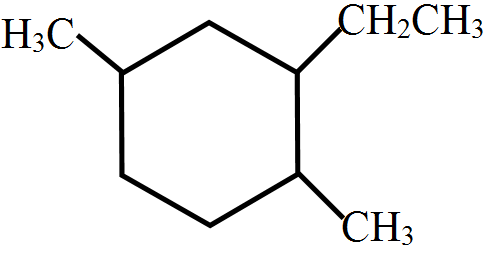

  1.  

Which of the following is strongest acid?
$\text{HCl},\text{HClO}_3,\text{HNO}_3,\text{H}_2\text{SO}_4,\text{HClO}_4$
Which of the following orbitals are possible? 1p, 2s, 2p and 3f
(a) If there is only one electron in the 3 p subshell, then in which of the $3 p _x, 3 p _y$ and $3 p _z$ orbitals will this electron be present?
(b) What are the quantum numbers representing the following :
(i) Size of orbitals
(ii) Shape of orbitals
(iii) Orientation of orbitals
(c) If the mass number of an element is double its atomic number and it has four electrons in its 2 p subshell, then write the name and electronic of this element.