MCQ
Inert pair effect is predominant in
- A$Si$
- ✓$Pb$
- C$Ge$
- D$Sn$
This is most stated in Groups 13,14 and 15
A possible given explanation is that due to presence of f-subshell electrons are to diffused, due to the shape of the forbitals, to effectively shield the s electrons from the pull of the nucleus.
A good example would be the elements of Group $13 .$ Aluminium in +1 state is unknown, and the stability of +1 oxidation state increases as we go down the group.
Thallium is most stable in +1 oxidation state, and compounds of Thallium in +3 oxidation state are known to be very strong oxidising agents, and have a tendency to reduce quickly to +1 state.
Hence option B is correct.
Generate a complete, print-ready paper with questions like this in minutes — across 16+ boards, with answer keys.
$\begin{array}{*{20}{c}}
{Ph - CH = CH - CH - C = O\xrightarrow[{PH = 4.5}]{{{H_2}N - OH}}} \\
{{\mkern 1mu} {\mkern 1mu} \,\,\,\,\,\,\,\,\,\,\,\,\,\,\,\,\,\,\,\,|\,\,\,\,\,\,\,\,\,\,\,\,\,\,\,|{\mkern 1mu} {\mkern 1mu} {\mkern 1mu} {\mkern 1mu} {\mkern 1mu} {\mkern 1mu} {\mkern 1mu} {\mkern 1mu} {\mkern 1mu} {\mkern 1mu} {\mkern 1mu} {\mkern 1mu} {\mkern 1mu} {\mkern 1mu} {\mkern 1mu} {\mkern 1mu} {\mkern 1mu} {\mkern 1mu} {\mkern 1mu} {\mkern 1mu} {\mkern 1mu} {\mkern 1mu} {\mkern 1mu} {\mkern 1mu} {\mkern 1mu} } \\
{{\mkern 1mu} {\mkern 1mu} {\mkern 1mu} {\mkern 1mu} \,\,\,\,\,\,\,\,\,\,\,\,\,\,\,\,\,\,\,\,\,C{H_3}\,\,\,\,\,\,\,H{\mkern 1mu} {\mkern 1mu} \,\,{\mkern 1mu} {\mkern 1mu} {\mkern 1mu} {\mkern 1mu} {\mkern 1mu} {\mkern 1mu} {\mkern 1mu} {\mkern 1mu} {\mkern 1mu} {\mkern 1mu} {\mkern 1mu} {\mkern 1mu} {\mkern 1mu} {\mkern 1mu} {\mkern 1mu} {\mkern 1mu} {\mkern 1mu} {\mkern 1mu} {\mkern 1mu} {\mkern 1mu} {\mkern 1mu} {\mkern 1mu} {\mkern 1mu} {\mkern 1mu} }
\end{array}$ ?

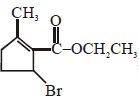
$(A)$ $Rb$ and $Cs$
$(B)$ $Na$ and $K$
$(C)$ $Ar$ and $Kr$
$(D)$ $I$ and $At$
Choose the correct answer from the options given below.