Question
Insert $16$ rational numbers between $2.1$ and $2.2$

Answer

Let: $x = 2.1, y = 2.2$ and $n = 16$
We know: $\text{d}=\frac{\text{y}-\text{x}}{\text{n}+1}=\frac{2.2-2.1}{16+1}=\frac{0.1}{17}=\frac{1}{170}=0.005\text{(approx.)}$
So, 16 rational numbers between $2.1$ and $2.2$ are: $(x + d), (x + 2d),...(x + 16d) = [2.1 + 0.005], [2.1 + 2(0.005)],...[2.1 + 16(0.005)] = 2.105, 2.11, $$2.115, 2.12, 2.125, 2.13, 2.135, 2.14, 2.145, 2.15, 2.155, 2.16, 2.165, 2.17, 2.175$ and $2.18$

Need a full question paper?

Generate a complete, print-ready paper with questions like this in minutes — across 16+ boards, with answer keys.

Start Generating Free

Similar questions

Rationalise the denominator of the following: $\frac{\sqrt{6}}{\sqrt{2}+\sqrt{3}}$
Write in decimal form and say what kind of decimal expansion: $\frac{{36}}{{100}}$
Bulbs are packed in cartons each containing $40$ bulbs. Seven hundred cartons were examined for defective bulbs and the results are given in the following table:
Number of defective bulbs $0$ $1$ $24$ $3$ $4$ $5$ $6$ more than $6$
Frequency $400$ $180$ $48$ $41$ $18$ $8$ $3$ $2$
One carton was selected at random. What is the probability that it has:
$i.$ No defective bulb?
$ii.$ Defective bulbs from $2$ to $6?$
$iii.$ Defective bulbs less than $4?$
Find the median of the data: $15, 6, 16, 8, 22, 21, 9, 18, 25$
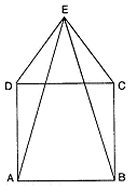
$\text{ABCD}$ is a square and $\text{DEC}$ is an equilateral triangle. Prove that $\text{AE = BE.}$
Image
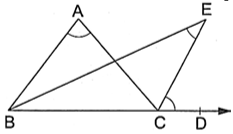
In the given figure, the side $BC$ of $\triangle ABC$ has been produced to a point $D$ . If the bisectors of $\angle ABC$ and $\angle ACD$ meet at point $E$ then prove that $\angle B E C=\frac{1}{2} \angle B A C$.
Image
If a wheel has six spokes equally spaced, then find the measure of the angle between two adjacent spokes.
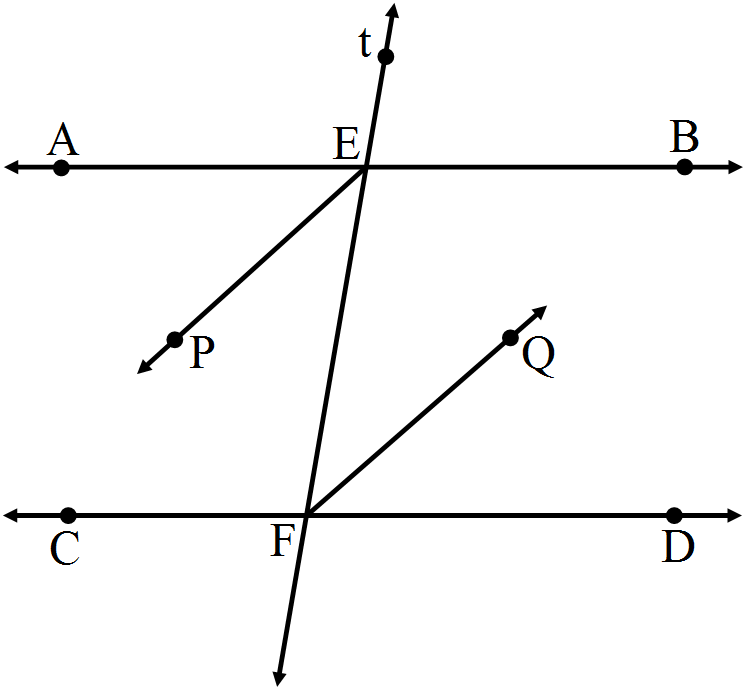
In the given figure, $AB || CD$ and a transversal $t$ cuts them at $E$ and $F$ respectively. If $EP$ and $FQ$ are the bisectors of $\angle\text{AEF}$ and $\angle\text{EFD}$ respectively, prove that $EP\ ||\ FQ$.
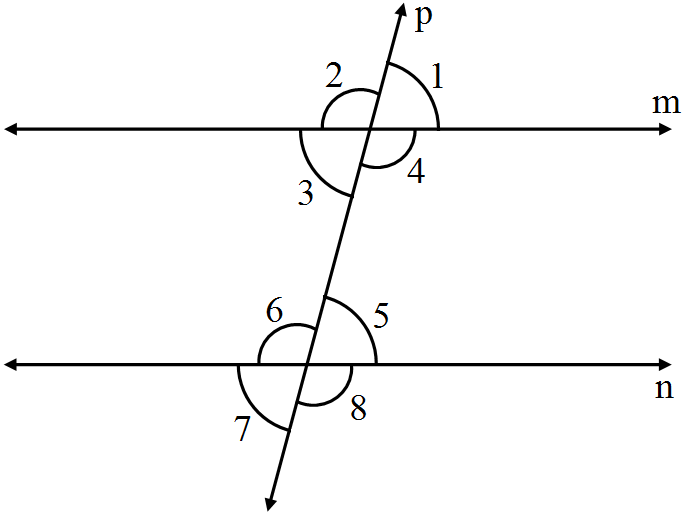
In figure transversal $l$ intersects two lines $m$ and $n$, $\angle{4}=110^\circ$ and $\angle{7}=65^\circ.$ Is $m\ ||\ n$?
Construct the following and give justification: An equilateral triangle if its altitude is $3.2\ cm.$