MCQ
$\int_{}^{} {\frac{1}{{x\sqrt {1 + \log x} }}\;dx = } $
  • A
    $\frac{2}{3}{(1 + \log x)^{3/2}} + c$
  • B
    ${(1 + \log x)^{3/2}} + c$
  • $2\sqrt {1 + \log x} + c$
  • D
    $\sqrt {1 + \log x} + c$

Answer

Correct option: C.
$2\sqrt {1 + \log x} + c$
c
(c)Put $t = 1 + \log x \Rightarrow dt = \frac{1}{x}dx$, then
$\int_{}^{} {\frac{{dx}}{{x\sqrt {1 + \log x} }}} = \int_{}^{} {\frac{{dt}}{{{t^{1/2}}}} = 2{t^{1/2}} + c} = 2{(1 + \log x)^{1/2}} + c$.

Need a full question paper?

Generate a complete, print-ready paper with questions like this in minutes — across 16+ boards, with answer keys.
Start Generating Free

Similar questions

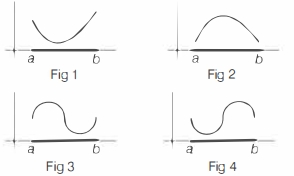
The following figure shows the graph of a differentiable function $y=f(x)$ on the interval $[a, b]$ (not containing $0$ ).  $FIGURE$  Let $g(x)=\frac{f(x)}{x}$. Which of the following is a possible graph of $y=g(x) ?$
A biased die is tossed and the respective probabilities for various faces to turn up are given below

$Face:$ $1$ $2$ $3$ $4$ $5$ $6$
$P(F)$ $0.1$ $0.24$ $0.19$ $0.18$ $0.15$ $0.14$

If an even face has turned up, then the probability that it is face $2$ or face $4$, is

$\frac{2^{3}-1^{3}}{1 \times 7}+\frac{4^{3}-3^{3}+2^{3}-1^{3}}{2 \times 11}+$$\frac{6^{3}-5^{3}+4^{3}-3^{3}+2^{3}-1^{3}}{3 \times 15}+\ldots .+$ $\frac{30^{3}-29^{3}+28^{3}-27^{3}+\ldots+2^{3}-1^{3}}{15 \times 63}$is equal to.
Let $A B C$ and $A B C^{\prime}$ be two non-congruent triangles with sides $A B=4$, $A C=A C^{\prime}=2 \sqrt{2}$ and angle $B=30^{\circ}$. The absolute value of the difference between the areas of these triangles is
$\int_{}^{} {\frac{1}{{{x^3}}}{{[\log {x^x}]}^2}\;dx = } $
If three conterminous edges of a parallelopiped are represented by $a - b,\,\,b - c$ and $c - a$, then its volume is
If $\int {{e^{{x^2}}}\left( {2 - \frac{1}{{{x^2}}}} \right)dx = {e^{{x^2}}}f(x) + C} $ and $f\left( {\frac{1}{2}} \right) = 2$ , then $f(1)$ is equal to (where $C$ is an arbitrary constant)
$\cot x - \tan x = $
If $I =\frac{2}{\pi} \int_{-\pi / 4}^{\pi / 4} \frac{ dx }{\left(1+ e ^{\sin x}\right)(2-\cos 2 x )}$ then $27 I ^2$ equals. . . . . . . .
If the equation $x^8 - kx^2 + 3 = 0$ has a real solution, then least integral value of $k$ is-