MCQ
$\int_{}^{} {\frac{{dx}}{{(x - {x^2})}} = } $
  • $\log x - \log (1 - x) + c$
  • B
    $\log (1 - {x^2}) + c$
  • C
    $ - \log x + \log (1 - x) + c$
  • D
    $\log (x - {x^2}) + c$

Answer

Correct option: A.
$\log x - \log (1 - x) + c$
a
(a)$\int_{}^{} {\frac{{dx}}{{(x - {x^2})}} = \int_{}^{} {\left( {\frac{1}{x} + \frac{1}{{1 - x}}} \right)} {\rm{ }}dx = \log x - \log (1 - x) + c} $.

Need a full question paper?

Generate a complete, print-ready paper with questions like this in minutes — across 16+ boards, with answer keys.
Start Generating Free

Similar questions

If $\omega $ is an imaginary root of unity, then the value of $\left| {\,\begin{array}{*{20}{c}}a&{b{\omega ^2}}&{a\omega }\\{b\omega }&c&{b{\omega ^2}}\\{c{\omega ^2}}&{a\omega }&c\end{array}\,} \right|$ is
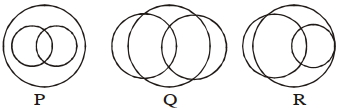
In a school, there are three types of games to be played. Some of the students play two types of games, but none play all the three games. Which Venn diagrams can justify the above statement ?
For a positive integer $n$, let ${f_n}(\theta ) = \left( {\tan \frac{\theta }{2}} \right)\,(1 + \sec \theta )\,(1 + \sec 2\theta )\,(1 + \sec 4\theta )$ ..... $(1 + \sec \,{2^n}\theta ).$ Then
In an election there are $8$ candidates, out of which $5$ are to be choosen. If a voter may vote for any number of candidates but not greater than the number to be choosen, then in how many ways can a voter vote
The set $S = \left\{ {1,2,3, \ldots ,12} \right\}$ is to be partitioned into three sets $A,\,B,\, C$ of equal size . Thus $A \cup B \cup C = S$ અને $A \cap B = B \cap C = C \cap A = \emptyset $ . The number of ways to partition $S$ is
For each $x\,\in R,$ let $[x]$ be the greatest integer less than or equal to $x.$ Then $\mathop {\lim }\limits_{x \to {0^ + }} \frac{{x([x] + [x])\,\sin \,[x]}}{{\left| x \right|}}$ is equal to
If $x$ is real, then greatest and least values of ${{{x^2} - x + 1} \over {{x^2} + x + 1}}$ are
$0.\mathop {423}\limits^{\,\,\,\,\, \bullet \, \bullet \,}  = $
If the sum of series $ \frac{1}{1 \cdot(1+d)}+\frac{1}{(1+d)(1+2 d)}+\ldots \ldots+\frac{1}{(1+9 d)(1+10 d)} $ is equal to $5 ,$ then $50 d$ is equal to :
The value of $\int\limits_0^1 {\frac{{{x^4}{{(1 - x)}^4}}}{{1 + {x^2}}}dx} $ is equal to