MCQ
$\int_0^{\pi /4} {} \sec x\log (\sec x + \tan x)\,dx = $
  • $\frac{1}{2}{[\log (1 + \sqrt 2 )]^2}$
  • B
    ${[\log (1 + \sqrt 2 )]^2}$
  • C
    $\frac{1}{2}{[\log (\sqrt 2 - 1)]^3}$
  • D
    $\frac{1}{2}{[\log (\sqrt 2 - 1)]^2}$

Answer

Correct option: A.
$\frac{1}{2}{[\log (1 + \sqrt 2 )]^2}$
a
(a) $I = \int_0^{\pi /4} {\sec x\log (\sec x + \tan x)dx} $

Put $\log (\sec x + \tan x) = t \Rightarrow \sec x\,dx = dt$

$ \Rightarrow I = \int_0^{\log (\sqrt 2 + 1)} {t\,dt = \left[ {\frac{{{t^2}}}{2}} \right]} _0^{\log (\sqrt 2 + 1)} $

$= \frac{{{{[\log (\sqrt 2 + 1)]}^2}}}{2}$.

Need a full question paper?

Generate a complete, print-ready paper with questions like this in minutes — across 16+ boards, with answer keys.
Start Generating Free

Similar questions

Choose the correct answer from the given four options.
The value of $\cot\Big[\cos^{-1}\Big(\frac{7}{25}\Big)\Big]$ is:
  1. $\frac{25}{24}$
  2. $\frac{25}{7}$
  3. $\frac{24}{25}$
  4. $\frac{7}{24}$
For any three vectors $\vec{\text{a}},\vec{\text{b}},\vec{\text{c}}$ the expression $\big(\vec{\text{a}}-\vec{\text{b}}\big).\big\{\big(\vec{\text{b}}-\vec{\text{c}}\big)\times\big(\vec{\text{c}}-\vec{\text{a}}\big)\big\}$ equals:
  1. $\big[\vec{\text{a}}\vec{\text{b}}\vec{\text{c}}\big]$
  2. $2\big[\vec{\text{a}}\vec{\text{b}}\vec{\text{c}}\big]$
  3. $\big[\vec{\text{a}}\vec{\text{b}}\vec{\text{c}]}^2$
  4. None of these
Let $f\left( n \right) = \left[ {\frac{1}{3} + \frac{{3n}}{{100}}} \right]n$ , where $[n]$ denotes the greatest integer less than or equal to $n$. Then $\sum\limits_{n = 1}^{56} {f\left( n \right)} $ is equal to
If $\int_0^\pi {x\,f({{\cos }^2}x + {{\tan }^4}x)\,dx} $ $ = k\int_0^{\pi /2} {f({{\cos }^2}x + {{\tan }^4}x)\,dx,} $ then the value of $k$ is
Primitive of $(x^2 + 4)^{-1/2}$ $w.r.t$ $x^2 + 2$  is equal to :-
Let $y(x)$ be the solution of the differential equation $\left( {xlogx} \right)\frac{{dy}}{{dx}} + y = 2xlogx,\left( {x \ge 1} \right)$ . Then $y(e) $ is equal to :      $[y(1)=0]$
The area of the region $\left\{(x, y): x^2 \leq y \leq\left|x^2-4\right|, y \geq 1\right\}$ is
A bag $X$ contains $2$ white and $3$ black balls and another bag $Y$ contains $4$ white and $2$ black balls. One bag is selected at random and a ball is drawn from it. Then the probability for the ball chosen be white is
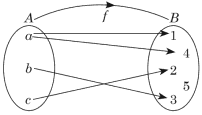
The diagram given below shows that
Image
The slope of the tangent to a curve $C : y = y ( x )$ at any point $[ x , y )$ on it is $\frac{2 e ^{2 x }-6 e ^{- x }+9}{2+9 e ^{-2 x }}$. If $C$ passes through the points $\left(0, \frac{1}{2}+\frac{\pi}{2 \sqrt{2}}\right)$ and $\left(\alpha, \frac{1}{2} e ^{2 \alpha}\right)$ then $e ^{\alpha}$ is equal to.