MCQ
$\int\limits^1_0\frac{\text{d}}{\text{dx}}\Big\{\sin^{-1}\Big(\frac{2\text{x}}{1+\text{x}^2}\Big)\Big\}\text{dx}$ is equal to:
  • A
    $0$
  • B
    ${\pi}$
  • $\frac{\pi}{2}$
  • D
    $\frac{\pi}{4}$

Answer

Correct option: C.
$\frac{\pi}{2}$
We have,
$\text{I}=\int\limits^1_0\frac{\text{d}}{\text{dx}}\Big\{\sin^{-1}\Big(\frac{2\text{x}}{1+\text{x}^2}\Big)\Big\}\text{dx}$
We know since $\int\text{f}'(\text{x})=\text{f}(\text{x})$
$\text{f}(\text{x})=\sin^{-1}\Big(\frac{2\text{x}}{1+\text{x}^2}\Big)$ and $\text{f}'(\text{x})=\frac{\text{d}}{\text{dx}}\Big\{\sin^{-1}\Big(\frac{2\text{x}}{1+\text{x}^2}\Big)\Big\}$
Therefore, $\text{I}=\Big[\sin^{-1}\Big(\frac{2\text{x}}{1+\text{x}^2}\Big)\Big]^1_0$
$=\sin^{-1}(1)-\sin^{-1}(0)$
$=\frac{\pi}{2}$

Need a full question paper?

Generate a complete, print-ready paper with questions like this in minutes — across 16+ boards, with answer keys.

Start Generating Free

Similar questions

If $A = \left[ {\begin{array}{*{20}{c}}1&1\\1&1\end{array}} \right],$then ${A^{100}} = $
The derivative of $\text{f(x)}=\int\limits^{\text{x}^3}_{\text{x}^2}\frac{1}{\log_{\text{e}}\text{t}}\text{ dt},(\text{x} > 0),$ is :
If $\int\frac{1}{5+4\sin\text{x}}\text{ dx}=\text{A}\tan^{-1}\Big(\text{B}\tan\frac{\pi}{2}+\frac{4}{3}\Big)+\text{C},$ then:
Let $A=\left(\begin{array}{cc}4 & -2 \\ \alpha & \beta\end{array}\right)$ . If $A ^{2}+\gamma A +18 I = O$, then $\operatorname{det}( A )$ is equal to
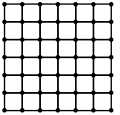
Consider the $6 \times 6$ square in the figure. Let $A_1, \mathrm{~A}_2, \ldots, A_{49}$ be the points of intersections (dots in the picture) in some order. We say that $A_i$ and $A_j$ are friends if they are adjacent along a row or along a column. Assume that each point $A_i$ has an equal chance of being chosen.

(image)

($1$) Let $p_i$ be the probability that a randomly chosen point has $i$ many friends, $i=0,1,2,3,4$. Let $X$ be a random variable such that for $i=0,1,2,3,4$, the probability $P(X=i)=p_i$. Then the value of $7 E(X)$ is

($2$) Two distinct points are chosen randomly out of the points $A_1, A_2, \ldots, A_{4 g}$. Let $p$ be the probability that they are friends. Then the value of $7 p$ is
 Let $y=y(x)$ be the solution curve of the differential equation $\frac{d y}{d x}=\frac{y}{x}\left(1+x y^2\left(1+\log _e x\right)\right)$ $x > 0, y(1)=3$. Then $\frac{y^2(x)}{9}$ is equal to :
The domain of the function $f(x)=\sin ^{-1}\left[2 x^{2}-3\right]+\log _{2}\left(\log _{\frac{1}{2}}\left(x^{2}-5 x+5\right)\right)$ where $[ t ]$ is the greatest integer function, is.
If $\int_{}^{} {(\sin 2x + \cos 2x)\;dx = \frac{1}{{\sqrt 2 }}\sin (2x - c) + a} $, then the value of  $a$  and  $c$  is
Choose the correct answer from the given four options.A die is thrown and a card is selected at random from a deck of $52$ playing cards. The probability of getting an even number on the die and a spade card is:
The shortest distance between the line

$\frac{x-3}{4}=\frac{y+7}{-11}=\frac{z-1}{5} \text { and } \frac{x-5}{3}=\frac{y-9}{-6}=\frac{z+2}{1}$ is :