MCQ
Inverse square law for illuminance is valid for
  • Isotropic point source
  • B
    Cylindrical source
  • C
    Search light
  • D
    All types of sources

Answer

Correct option: A.
Isotropic point source
a
(a) Inverse square law for illuminance is valid and can be applied for all types of sources.

Need a full question paper?

Generate a complete, print-ready paper with questions like this in minutes — across 16+ boards, with answer keys.
Start Generating Free

Similar questions

Let E, G and N represent the magnitudes of electromagnetic gravitational and nuclear forces between two electrons at a given separation. Then:
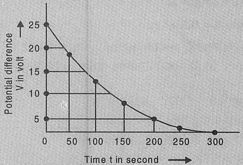
The figure shows an experimental plot for discharging of a capacitor in an $R-C$ circuit. The time constant $\tau$ of this circuit lies between
If the series limit of Lymen series for Hydrogen atom is equal to the series limit of Balmer  series for a hydrogen like atom, then atomic number of this hydrogen like atom will be 
A pure semiconductor at absolute zero has :
A beam of light travelling along $X$-axis is described by the electric field $E _{ y }=900 \sin \omega( t - x / c )$. The ratio of electric force to magnetic force on a charge $q$ moving along $Y$-axis with a speed of $3 \times 10^{7}\,ms ^{-1}$ will be.

[Given speed of light $=3 \times 10^{8}\,ms ^{-1}$ ]

Diameter of a plano-convex lens is $6 \,cm$ and thickness at the centre is $3\, mm$. If the speed of light in the material of the lens is $2  \times  10^8 m/sec$, the focal length of the lens is.......$cm$
For Bragg's diffraction by a crystal to occur, then the X-ray of wavelength $\lambda$ and interatomic distance $d$ must be
Two long straight parallel conductors separated by a distance of $0.5\,m$ carry currents of $5\,A$ and $8\,A$ in the same direction. The force per unit length experienced by each other is
During negative b - decay
A battery of e.m.f. 10 V and internal resistance 0.5 ohm is connected across a variable resistance R. The value of R for which the power delivered in it is maximum is given by