MCQ
Ions that must be present for binding the cross bridges is
  • A
    $N{a^ + }$
  • $C{a^{ + + }}$
  • C
    ${K^ + }$
  • D
    None of these

Answer

Correct option: B.
$C{a^{ + + }}$
b
It’s obvious.

Need a full question paper?

Generate a complete, print-ready paper with questions like this in minutes — across 16+ boards, with answer keys.

Start Generating Free

Similar questions

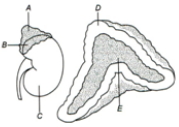
Identify $A$ to $E$ in the following figure and choose the correct option
Which is a true fish
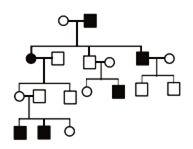
In the following human pedigree, the filled symbols represent the affected individuals. Identify the type of given pedigree.
Choose correct option
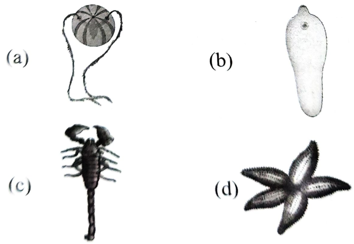
Which one of the following pairs of animals is correctly matched with the kind of their body symmetry
In which genetic condition, each cell in the affected person, has three sex chromosomes $XXY$ ?
What is the obligatory water reabsorption?
Immunoglobulins are made up of
Myofibrils are structural constituent of muscle fibre, select correct statement for myofibril :
(i) Each myofibril has alternate dark and light bands on it.
(ii) Striated appearance of myofibril is due to the distribution pattern of two important proteins- actin and myosin.
(iii) The light bands contain myosin and is called I- band or isotropic band, whereas the dark band called A or Anisotropic band contains actin.
(iv) Actin filaments are thicker as compared to the myosin filaments, hence are commonly called thick and thin filaments respectively.
(v) In the centre of each A-band is an elastic fibre called Z-line which bisects it.
(vi) The thick filaments in the A-band are held together in the middle of this band by a thin fibrous membrane called M-line.
(vii) The portion of the myofibril between two successive Z-lines is considered as the functional unit of contraction and is called a sarcomere.
Which of the following statements are correct for basis of classification of animals ?
(i) An undifferentiated layer, mesoglea, is present in between the ectoderm and the endoderm in triploblastic animals.
(ii) Annelids, molluscs, arthropods, echinoderms, hemichordates and chordates are coelomates.
(iii) Aschelminthes are called pseudocoelomates.
(iv) The animals in which the body cavity is absent are called acoelomates.
(v) Platyhelminthes to chordates are called diploblastic animals.
Image