MCQ
Isotopes of same element exists in nature.How they differ from each other? 
  • A
    They will have different locations on the periodic table.
  • B
    They will have undergo different chemical reactions.
  • C
    They have different numbers of protons.
  • D
    They have different numbers of neutrons.

Answer

  1. They have different numbers of neutrons.

Explanation:

Isotopes of the same element must have same number of protons but different number of neutrons.

Also the isotopes of same element are located at same place in the periodic table and undergo same chemical reaction.

Need a full question paper?

Generate a complete, print-ready paper with questions like this in minutes — across 16+ boards, with answer keys.

Start Generating Free

Similar questions

The inductance of a closed-packed coil of 400 turns is 8 mH. A current of 5 mA is passed through it. The magnetic flux through each turn of the coil is

(a)  

(b)

(c)   

(d)   

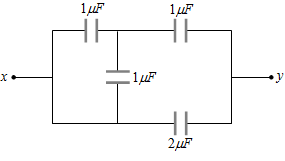
Four capacitors are connected as shown in the figure. Their capacities are indicated in the figure. The effective capacitance between points x  and y  is (in μF)

(a)   

(b)  

(c)   

(d) 2

Two independent parallel wires in which the current is flowing in the same direction. They will:
Pick out the temperature at which iron becomes paramagnetic?

Which of the following atoms has the lowest ionization potential

(a)  

(b)  

(c)

(d)    

A beam of plane polarized light falls normally on a polarizer of cross sectional area 3 . Flux of energy of incident ray in 10–3 W. The polarizer rotates with an angular frequency of 31.4 rad/sec. The energy of light passing through the polarizer per revolution will be

(a) 10–4 Joule

(b) 10–3 Joule

(c) 10–2 Joule

(d) 10–1 Joule

The polarisation of electromagnetic wave is in:

In Young's double slit experiment, the fringe width is 1  if the distance between the slit and screen is doubled and the distance between the two slit is reduced to half and wavelength is changed from 6.4   to , 4.0 , the value of new fringe width will be

(a) 0.15  

(b) 2.0  

(c) 1.25  

(d) 2.5  

In  solution when electric current equal to 2.5 faraday is passed, the gm equivalent deposited on the cathode is

(a) 1

(b) 1.5

(c) 2  

(d) 2.5

125 identical drops each charged to the same potential of 50 volts are combined to form a single drop. The potential of the new drop will be

(a) 50 V   

(b) 250 V

(c) 500 V

(d) 1250 V