MCQ
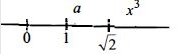
Let $a,b \in R,\left( {a \ne 0} \right)$. if the function $f$ defined as$f\left( x \right)\left\{ \begin{array}{l} \frac{{2{x^2}}}{a}\,\,\,\,\,\,\,\,\,\,\,\,,\,\,\,\,\,0 \le x < 1\,\,\,\\ a\,\,\,\,\,\,\,\,\,\,\,\,\,\,\,\,\,,\,\,\,\,\,1 \le x < \sqrt 2 \,\,\,\,\,\,\,\,\,\,\,\,\,\,\,\,\,\\ \frac{{2{b^2} - 4b}}{{{x^3}}}\,\,\,,\,\,\,\,\,\sqrt 2  \le x < \infty  \end{array} \right.,$  is continuous in the interval $\left[ {0,\infty } \right]$ , then an ordered pair $(a, b)$ is
  • A
    $\left( { - \sqrt 2 ,1 - \sqrt 3 } \right)$
  • B
    $\left( {\sqrt 2 , - 1 + \sqrt 3 } \right)$
  • C
    $\left( {\sqrt 2 ,1 - \sqrt 3 } \right)$
  • D
    $\left( { - \sqrt 2 ,1 + \sqrt 3 } \right)$
Answer

Continuity at $x=1$$\frac{2}{a} = a $
$\Rightarrow a = \pm \sqrt 2 $
Continuity at $x = \sqrt 2 \,a = \sqrt 2 $
$a = \frac{{2{b^2} - 4b}}{{2\sqrt 2 }}$
Put $a = \sqrt 2 $
$2 = {b^2} - 2b\,\,\,\,\,\,\,\,$
$ \Rightarrow {b^2} - 2b - 2 = 0$
$b = \frac{{2 \pm \sqrt {4 + 4.2} }}{2} = 1 \pm \sqrt 3 $
So, $\left( {a,b} \right) = \left( {\sqrt 2 ,1 - \sqrt 3 } \right)$

Need a full question paper?

Generate a complete, print-ready paper with questions like this in minutes — across 16+ boards, with answer keys.

Start Generating Free

Similar questions

If the ${n^{th}}$ term of an $A.P.$ be $(2n - 1)$, then the sum of its first $n$ terms will be
The value of $\int_{\,0}^{\,\pi /2} {\frac{{{e^{{x^2}}}}}{{{e^{{x^2}}} + {e^{{{\left( {\frac{\pi }{2}\,\, - \,\,x} \right)}^2}}}}}dx} $ is
Let $P $ and $Q $ be $3×3$ matrices $P \ne Q$. If ${P^3} = {Q^3},{P^2}Q = {Q^2}P$ then determinant of $\det \left( {{P^2} + {Q^2}} \right)$ is equal to :
Let $\alpha_1, \alpha_2, \ldots, \alpha_7$ be the roots of the equation $x^7+$ $3 x^5-13 x^3-15 x=0$ and $\left|\alpha_1\right| \geq\left|\alpha_2\right| \geq \ldots \geq\left|\alpha_7\right|$. Then $\alpha_1 \alpha_2-\alpha_3 \alpha_4+\alpha_5 \alpha_6$ is equal to $..................$.
Match the conics in Column $I$ with the statements/expressions in Column $II$.
Column $I$ Column $II$
$(A)$ Circle $(p)$ The locus of the point $(h, k)$ for which the line $h x+k y=1$ touches the circle $x^2+y^2=4$
$(B)$ Parabola $(q)$ Points $z$ in the complex plane satisfying $|z+2|-|z-2|= \pm 3$
$(C)$ Ellipse $(r)$ Points of the conic have parametric representation $x=\sqrt{3}\left(\frac{1-t^2}{1+t^2}\right), y=\frac{2 t}{1+t^2}$
$(D)$ Hyperbola $(s)$ The eccentricity of the conic lies in the interval $1 \leq x<\infty$
  $(t)$ Points $z$ in the complex plane satisfying $\operatorname{Re}(z+1)^2=|z|^2+1$
The term independent of $x$ in the expansion of ${\left( {2x + \frac{1}{{3x}}} \right)^6}$ is
If $f(t) = \int_{\, - t}^{\,t} {\frac{{dx}}{{1 + {x^2}}},} $ then $f'(1)$ is
Let the point, on the line passing through the points P(1, 2, 3) and Q(5, -4, 7), farther from the origin and at a distance of 9 units from the point P, be (α, β, γ). Then $\alpha^2+\beta^2+\gamma^2$ is equal to :
Let $\overrightarrow{ a }=2 \hat{ i }-3 \hat{ j }+4 \hat{ k }$ and $\overrightarrow{ b }=7 \hat{ i }+\hat{ j }-6 \hat{ k }$ If $\overrightarrow{ r } \times \overrightarrow{ a }=\overrightarrow{ r } \times \overrightarrow{ b }, \overrightarrow{ r } \cdot(\hat{ i }+2 \hat{ j }+\hat{ k })=-3,$ then $\overrightarrow{ r } \cdot(2 \hat{ i }-3 \hat{ j }+\hat{ k })$ is equal to
If $g(f(x)) = |\sin x|$ and $f(g(x)) = (\sin \sqrt x )^2$, then