MCQ
Let $f$ be a differentiable function satisfying $f ( x )=\frac{2}{\sqrt{3}} \int_{0}^{\sqrt{3}} f \left(\frac{\lambda^{2} x }{3}\right) d \lambda, x >0$ and $f (1)=\sqrt{3}$. If $y=f(x)$ passes through the point $(\alpha, 6)$, then $\alpha$ is equal to $.........$
  • A
    $6$
  • $12$
  • C
    $4$
  • D
    $3$

Answer

Correct option: B.
$12$
b
Let, $\frac{\lambda^{2} x }{3}= t$

$\frac{2 \lambda x }{3} d \lambda= dt$

$d \lambda=\frac{3}{2} \cdot \frac{1 \sqrt{ x }}{ x \cdot \sqrt{3} \sqrt{ t }} dt$

$d \lambda=\frac{\sqrt{3}}{2} \cdot \frac{1}{\sqrt{ x }} \cdot \frac{ dt }{\sqrt{ t }}$

So, $f(x)=\frac{1}{\sqrt{x}} \int_{0}^{x} \frac{f(t)}{\sqrt{t}} d t$

$\sqrt{x} \cdot f^{\prime}(x)+\frac{f(x)}{2 \sqrt{x}}=\frac{f(x)}{\sqrt{x}}$

$\sqrt{ x } \cdot f ^{\prime}( x )=\frac{ f ( x )}{2 \sqrt{ x }}$

$\frac{ dy }{ y }=\frac{ dx }{2 x }$

$\ln y=\frac{1}{2} \ln x+c \Rightarrow f(x)=\sqrt{x}$

$y =\sqrt{3 x } \quad$ $\{as$ $f (1)=\sqrt{3}\}$

So, $f(x)=\sqrt{3 x}$

Now, $f(\alpha)=6 \Rightarrow 36=3 \alpha$

$\alpha=12$
Need a full question paper?

Generate a complete, print-ready paper with questions like this in minutes — across 16+ boards, with answer keys.

Start Generating Free

Similar questions

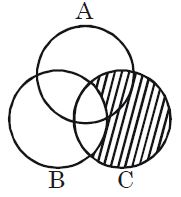
The shaded region in given figure is-
$\int_0^{\pi /2} {{{\sin }^2}x{{\cos }^3}x} \,dx = $
The sum of first two terms of a $G.P.$ is $1$ and every term of this series is twice of its previous term, then the first term will be
A curve is given by the equations $x = a\cos \theta + {1 \over 2}b\cos 2\theta ,$ $y = a\sin \theta + {1 \over 2}b\,\sin \,2\theta $, then the points for which ${{{d^2}y} \over {d{x^2}}} = 0,$ is given by
A lot consists of $12$ good pencils, $6$ with minor defects and $2$ with major defects. A pencil is choosen at random. The probability that this pencil is not defective is
Let $f$ be a differentiable function $R$ to $R$ such that $\left| {f\,(x)\, - \,f(y)} \right|\, \le \,2\,{\left| {x - y} \right|^{\frac{3}{2}}},$ for all $x,y\,\in R .$ If $f\,(0)=1$ then $\int\limits_0^1 {{f^2}\,(x)\,dx} $ is equal to
Let $C_1$ and $C_2$ be the centres of the circles $x^2 + y^2 -2x -2y -2 = 0$ and $x^2 + y^2 - 6x-6y + 14 = 0$ respectively. If $P$ and $Q$ are the points of intersection of these circles, then the area (in sq. units) of the quadrilateral $PC_1QC_2$ is ............. $\mathrm{sq. \, units}$
If ${2^{{a_1}}},{2^{{a_2}}},{2^{{a_3}}},{......2^{{a_n}}}$ are in $G.P.$ then $\left| {\begin{array}{*{20}{c}}
  {{a_1}}&{{a_2}}&{{a_3}} \\ 
  {{a_{n + 1}}}&{{a_{n + 2}}}&{{a_{n + 3}}} \\ 
  {{a_{2n + 1}}}&{{a_{2n + 2}}}&{{a_{2n + 3}}} 
\end{array}} \right|$ is equal to
If the sum of the second, third and fourth terms of a positive term $G.P.$ is $3$ and the sum of its sixth, seventh and eighth terms is $243,$ then the sum of the first $50$ terms of this $G.P.$ is
If $1,\,\omega ,\,{\omega ^2}$ are the roots of unity, then ${(1 - 2\omega + {\omega ^2})^6}$ is equal to