MCQ
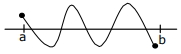
Let  $f:(a, b) \rightarrow R$ be twice differentiable function such that $f(x)=\int_{a}^{x} g(t) d t$ for a differentiable function $g(x) .$ If $f(x)=0$ has exactly five distinct roots in $(a, b)$, then $g(x) g^{\prime}(x)=0$ has at least:
  • seven roots in $(a, b)$
  • B
    five roots in $(a, b)$
  • C
    three roots in $(a, b)$
  • D
    twelve roots in $(a, b)$

Answer

Correct option: A.
seven roots in $(a, b)$
a
$\mathrm{f}(\mathrm{x})=\int_{\mathrm{a}}^{\mathrm{x}} \mathrm{g}(\mathrm{t}) \,\mathrm{d} \mathrm{t}$

$\mathrm{f}(\mathrm{x}) \rightarrow 5$

$\mathrm{f}^{\prime}(\mathrm{x}) \rightarrow 4$

$\mathrm{~g}(\mathrm{x}) \rightarrow 4$

$\mathrm{~g}^{\prime}(\mathrm{x}) \rightarrow 3$

Need a full question paper?

Generate a complete, print-ready paper with questions like this in minutes — across 16+ boards, with answer keys.

Start Generating Free

Similar questions

If $y = \sin x + {e^x},$ then ${{{d^2}x} \over {d{y^2}}} = $
If the function $f(x) = \left\{ \begin{array}{l}1 + \sin \frac{{\pi x}}{2}\,\,,\,{\rm{\,\,for}}\,\, - \infty < x \le 1\\\,\,\,\,\,\,\,\,ax + b,\,{\rm{\,\,for}}\,\,1 < x < 3\\\,\,\,\,6\tan \frac{{x\pi }}{{12}},\,{\rm{\,\,for\,\,}}3 \le x < 6\end{array} \right.$ is continuous in the interval $( - \infty ,\,6)$, then the values of $a$ and $b$ are respectively
Let the sets $A$ and $B$ denote the domain and range respectively of the function $f(x)=\frac{1}{\sqrt{\lceil x\rceil-x}}$ where $\lceil x \rceil$ denotes the smallest integer greater than or equal to $x$. Then among the statements $( S 1): A \cap B =(1, \infty)-N$ and
$( S 2): A \cup B=(1, \infty)$
Two dice are thrown and the sum of the numbers which come up on the dice is noted. Let us consider the following events associated with this experiment

$A:$ $^{\prime}$ the sum is even $^{\prime}$.
$B:$ $^{\prime}$the sum is a multiple of $3$$^{\prime}$
$C:$ $^{\prime}$the sum is less than $4 $$^{\prime}$
$D:$ $^{\prime}$the sum is greater than $11$$^{\prime}$.

Which pairs of these events are mutually exclusive ?

For the complex number $z$, one from $z + \bar z$ and $z\,\bar z$ is
If the coefficients of $x$ and $x^2$ in $(1+x)^p(1-x)^q$ are $4$ and $-5$ respectively, then $2 p+3 q$ is equal to
If a function $f(x)$ defined by $f(x)=\left\{\begin{array}{ll}a e^{x}+b e^{-x}, & -1 \leq x<1 \\ c x^{2}, & 1 \leq x \leq 3 \\ a x^{2}+2 c x, & 3 < x \leq 4\end{array}\right.$

be continuous for some $a, b, c \in R$ and $f ^{\prime}(0)+ f ^{\prime}(2)= e ,$ then the value of of $a$ is 

Let $f (x) = \frac{1}{x}\,\ln \left( {\frac{x}{{{e^x}}}} \right)$ then its primitive $w.r.t. \,\,x$ is
If $A = \{ 2,\,4,\,5\} ,\,\,B = \{ 7,\,\,8,\,9\} ,$ then $n(A \times B)$ is equal to
The most general value of $\theta $ satisfying the equations $\sin \theta = \sin \alpha $ and $\cos \theta = \cos \alpha $ is