MCQ
Let there be three independent events $E _{1}, E _{2}$ and $E _{3}$. The probability that only $E _{1}$ occurs is $\alpha$, only $E _{2}$ occurs is $\beta$ and only $E _{3}$ occurs is $\gamma .$ Let $'p'$ denote the probability of none of events occurs that satisfies the equations $(\alpha-2 \beta) p =\alpha \beta$ and $(\beta-3 \gamma) p =2 \beta \gamma .$ All the given probabilities are assumed to lie in the interval $(0,1)$

Then, $\frac{\text { Probability of occurrence of } E _{1}}{\text { Probability of occurrence of } E _{3}}$ is equal to ..........

  • A
    $8$
  • $6$
  • C
    $3$
  • D
    $9$

Answer

Correct option: B.
$6$
b
Let $P \left( E _{1}\right)= P _{1} ; P \left( E _{2}\right)= P _{2} ; P \left( E _{3}\right)= P _{3}$

$P \left( E _{1} \cap \overline{ E }_{2} \cap \overline{ E }_{3}\right)=\alpha= P _{1}\left(1- P _{2}\right)\left(1- P _{3}\right) \ldots \ldots$

$P \left(\overline{ E }_{1} \cap E _{2} \cap \overline{ E }_{3}\right)=\beta=\left(1- P _{1}\right) P _{2}\left(1- P _{3}\right)$

$P \left(\overline{ E }_{1} \cap \overline{ E }_{2} \cap E _{3}\right)=\gamma=\left(1- P _{1}\right)\left(1- P _{2}\right) P _{3} \ldots \ldots$

$P \left(\overline{ E }_{1} \cap \overline{ E }_{2} \cap \overline{ E }_{3}\right)= P =\left(1- P _{1}\right)\left(1- P _{2}\right)\left(1- P _{3}\right) \ldots \ldots$

Given that, $(\alpha-2 \beta) P =\alpha \beta$

$\Rightarrow\left( P _{1}\left(1- P _{2}\right)\left(1- P _{3}\right)-2\left(1- P _{1}\right) P _{2}\left(1- P _{3}\right)\right) P = P _{1} P _{2}$

$\quad\left(1- P _{1}\right)\left(1- P _{2}\right)\left(1- P _{3}\right)^{2}$

$\Rightarrow\left( P _{1}\left(1- P _{2}\right)-2\left(1- P _{1}\right) P _{2}\right)= P _{1} P _{2}$

$\Rightarrow\left( P _{1}- P _{1} P _{2}-2 P _{2}+2 P _{1} P _{2}\right)= P _{1} P _{2}$

$\Rightarrow P _{1}=2 P _{2} \quad \ldots \ldots(1)$

and similarly, $(\beta-3 \gamma) P =2 B \gamma$

$P _{2}=3 P _{3} \quad \ldots \ldots(2)$

So, $P _{1}=6 P _{3} \Rightarrow \frac{ P _{1}}{ P _{3}}=6$
Need a full question paper?

Generate a complete, print-ready paper with questions like this in minutes — across 16+ boards, with answer keys.

Start Generating Free

Similar questions

If the determinant $\begin{vmatrix}\text{a}&\text{b}&2\text{a}\alpha+3\text{b}\\\text{b}&\text{c}&2\text{b}\alpha+3\text{c}\\2\text{a}\alpha+ 3\text{b}&2\text{b}\alpha+3\text{c}&0\end{vmatrix}=0,$ then:
  1. a, b, c are in H.P.
  2. $\alpha$ is a root of 4ax2 + 12bx + 9c = 0 or a, b, c are in G.P.
  3. a, b, c are in G.P. only.
  4. a, b, c are in A.P.
If f : [1, $\infty$) → [2, $\infty$) is given by $\text{f(x)}=\text{x}+\frac{1}{\text{x}},$ then f-1 equals to:
  1. $\frac{\text{x}+\sqrt{\text{x}^2-4}}{2}$
  2. $\frac{\text{x}}{1+\text{x}^2}$
  3. $\frac{\text{x}-\sqrt{\text{x}^2-4}}{2}$
  4. $1+\sqrt{\text{x}^2-4}$
The graph of the inequality $2 x+3 y>6$ is
Let $A$ denote the set of all real numbers $x$ such that $x^3-[x]^3=\left(x-[x]^3\right)$, where $[x]$ is the greatest integer less than or equal to $x$. Then,
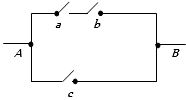
Consider the circuit,If the probability that each switch is closed is $p$, then find the probability of current flowing through $AB$
$\int_{}^{} {\frac{{\sqrt {{x^2} + 1} [\log ({x^2} + 1) - 2\log x]}}{{{x^4}}}} dx$ is equal to
$\int\frac{\sin^2\text{x}-\cos^2\text{x}}{\sin^2\text{x}\cos^2\text{x}}\text{dx}$ is equal to:
  1. $\tan\text{x}+\cos\text{x}+\text{c}$
  2. $\tan\text{x}+\text{cosec}\text{x}+\text{c}$
  3. $\tan\text{x}+\text{cot}\text{x}+\text{c}$
  4. $\tan\text{x}+\sec\text{x}+\text{c}$
Let $A=\{1,3,4,6,9\}$ and $B=\{2,4,5,8,10\}$. Let $R$ be a relation defined on $A \times B$ such that $R =$ $\left\{\left(\left(a_1, b_1\right),\left(a_2, b_2\right)\right): a_1 \leq b_2\right.$ and $\left.b_1 \leq a_2\right\}$. Then the number of elements in the set $R$ is
Box $I$ contains $30$ cards numbered $1$ to $30$ and Box $II$ contains $20$ cards numbered $31$ to $50 .$ A box is selected at random and a card is drawn from it. The number on the card is found to be a non-prime number. The probability that the card was drawn from Box $I$ is
If $y = {\tan ^{ - 1}}\left( {{{\sqrt x - x} \over {1 + {x^{3/2}}}}} \right),$ then $y'(1)$ is