MCQ
Light waves can be polarised because they:
- AHave high frequencies
- BHave short wavelength
- CAre transverse
- DCan be reflected
Explanation:
Polarisation of light waves is possible only because they can oscillate in more than one orientation i.e., they are transverse in nature. It has no dependence on its wavelength and frequencies.
Generate a complete, print-ready paper with questions like this in minutes — across 16+ boards, with answer keys.
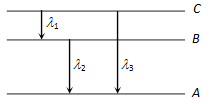
Energy levels A, B, C of a certain atom corresponding to increasing values of energy i.e. . If
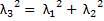
. If  are the wavelengths of radiations corresponding to the transitions C to B, B to A and C to A respectively, which of the following statements is correct
|
(a) |
(b) |
(c) |
(d) |
If a lens is cut into two pieces perpendicular to the principal axis and only one part is used, the intensity of the image
|
(a) Remains same |
(b) |
(c) 2 times |
(d) Infinite |
The current flowing in a copper voltameter is 1.6 A. The number of  ions deposited at the cathode per minute are
|
(a) 1.5 |
(b) 3 |
(c) 6 |
(d) 1 |
A long solenoid has n turns per meter and current I A is flowing through it. The magnetic field at the ends of the solenoid is
|
(a) |
(b) |
(c) Zero |
(d) 2 |
$\frac{1}{\text{v}}-\frac{1}{\text{u}}=\frac{1}{\text{uf}}$
$\frac{1}{\text{v}^2}-\frac{1}{\text{u}}=\frac{1}{\text{f}}$
$\frac{1}{\text{v}-\text{t}}-\frac{1}{\text{u}+\text{t}}=\frac{1}{\text{f}}$
$\frac{1}{\text{v}}-\frac{1}{\text{u}}+\frac{\text{t}}{\text{uv}}=\frac{\text{t}}{\text{f}}$
Two parallel wires are carrying electric currents of equal magnitude and in the same direction. They exert
|
(a) An attractive force on each other |
(b) A repulsive force on each other |
|
(c) No force on each other |
(d) A rotational torque on each other |