Question
List the three major functions of a gene.

Answer

Three major functions of a gene are:
  1. It should be able to store information and to express itself when required.
  2. It should be heritable from one generation to next.
  3. It should be autocatalytic, i.e., should be able to produce its own replica.

Need a full question paper?

Generate a complete, print-ready paper with questions like this in minutes — across 16+ boards, with answer keys.
Start Generating Free

Similar questions

What is point mutation? Give one example.
Depending upon the chemical nature of the template (DNA or RNA) and the nature of nucleic acids synthesized from it (DNA or RNA), list the types of nucleic acid polymerases.
Explain: Amoebiasis.
Define decomposition.
A3' ............ 5'B
C5’ ........... 3'D.
AB and CD represent two strands of a DNA molecule. When this molecule undergoes replication, forming a replication fork between A and C in the above.
  1. Name the templete strand for replication.
  2. Using which strand as the templete, will there be continuous synthesis of a complementary DNA strand
  3. Complementary to which strand will okazaki segments get synthesised, discontinuous synthesis occurs.
  4. What are templete strands and Okazaki pieces?
  5. In which direction is a new strand synthesised?
Describe one example of adaptive radiation.###What is adaptive radiation? Describe one example of adaptive radiation.
Can you suggest a method to remove oil (hydrocarbon) from seeds based on your understanding of rDNA technology and chemistry of oil?
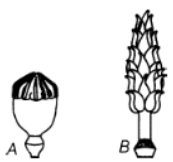
These pictures show the gynoecium of (A) Papaver and (B) Michelia flowers, Write the difference in the structure of their ovaries.
Image
What is a vaccine? How do they act to provide long term immunity to an individual, who is vaccinated?

OR

Write the events that take place when a vaccine for any disease is introduced into the human body.

OR

How does a vaccine for a particular disease immunise the human body against that disease?

OR

Name and explain the type of immunity that is provided by injecting microbes deliberately during immunisation into the human body.

How is commensalism different from predation, though one of the partners is benefitted in each of them?