Question
List the various abiotic environmental factors.

Answer

Decomposition is the process that involves the breakdown of complex organic matter or biomass from the body of dead plants and animals with the help of decomposers into inorganic raw materials such as carbon dioxide, water, and other nutrients. The various processes involved in decomposition are as follows:
  • Fragmentation: It is the first step in the process of decomposition. It involves the breakdown of detritus into smaller pieces by the action of detritivores such as earthworms.
  • Leaching: It is a process where the water soluble nutrients go down into the soil layers and get locked as unavailable salts.
  • Catabolism: It is a process in which bacteria and fungi degrade detritus through various enzymes into smaller pieces.
  • Humification: The next step is humification which leads to the formation of a dark coloured colloidal substance called humus, which acts as reservoir of nutrients for plants.
  • Mineralization: The humus is further degraded by the action of microbes, which finally leads to the rlease of inorganic nutrients into the soil. This process of releasing inorganic nutrients from the humus is known as mineralization. Decomposition produces a dark coloured, nutrient-rich substance called humus. Humus finally degrades and releases inorganic raw materials such as $CO_2$, water, and other nutrient in the soil.

Need a full question paper?

Generate a complete, print-ready paper with questions like this in minutes — across 16+ boards, with answer keys.

Start Generating Free

Similar questions

i. Double fertilisation is an event unique to all flowering plants. Explain the process.
ii. Give a reason for the following:
a. A seed of an orange has many embryos.
b. Cashew is a false fruit but Guava is a true fruit.
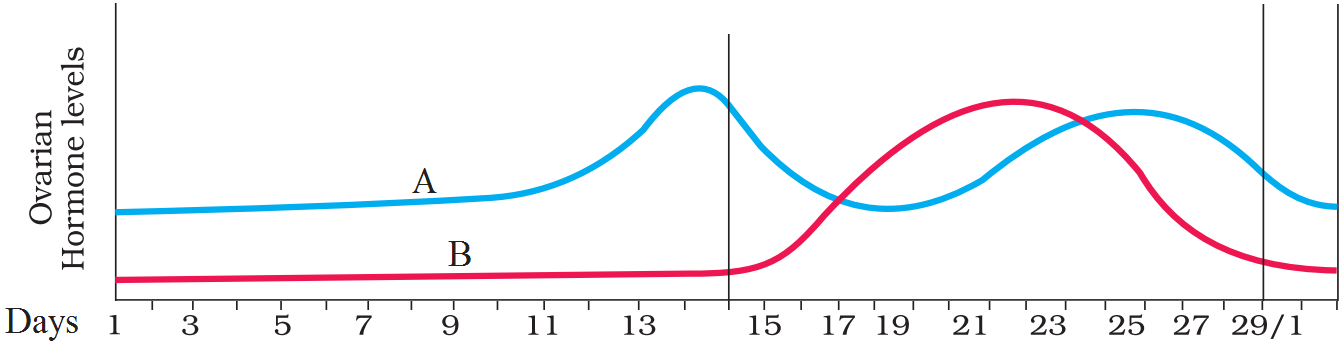
The graph given below shows the variation in the levels of ovarian hormones during various phases of menstrual cycle:
Specify the source of the hormone marked in the diagram.
State the Mendelian principle which can be derived from such a cross and not from monohybrid cross.
Describe the exponential growth model of a population with diagram and curve.
What will be the P/ R ratio of a climax community and a pioneer community. What explanation could you offer for the changes seen in P/ R ratio of a pioneer community and the climax community.
Explain the contribution of Alfred Sturtevant in ‘Chromosome mapping’.
Mention the biological factors of ecology.
What is foetal ejection reflex? Explain how it leads to parturition?
Read the following and answer any four questions from (i) to (v) given below:
Transgenic animals can serve as factories that in some cases, may produce large amount of proteins more efficiently. Transgenic mice have been engineered to express human antibodies by introducing large segment of human DNA encoding human immunoglobulin genes. In transgenic large animals such as cow or sheep proteins of pharmaceutical value can be produced in large quantities in milk which is later purified. Transgenesis can be used to alter many phenotypic properties including growth rate, fat composition, milk production, hair texture, etc.
  1. The production of transgenic animals includes
  1. Identification and separation of desired gene.
  2. Combining the desired gene with appropriate vector.
  3. Introduction of vector in cells, tissues or embryos.
  4. All of these.
  1. In transgenic animals, i.e., cow and sheep proteins of pharmaceutical value are produced in large quantities in the
  1. Blood.
  2. Accumulated fat.
  3. Mammary glands.
  4. None of these.
  1. Mouse is mostly preferred animal for studies on gene transfer because.
  1. Short oestrous cycle.
  2. Long gestation period.
  3. Short generation time.
  4. Production of one or two offspring per pregnancy.
  1. Both (A) and (C)
  2. Both (A) and (B)
  3. Only D
  4. Both (C) and (D).
  1. Transgenic genes alter many phenotypic properties including:
  1. Growth rate.
  2. Fat composition.
  3. Milk production.
  4. All of these.
  1. Assertion: Transgenic mice have been engineered to express human antibodies.
Reason: Large segment of human DNA encoding human immunoglobulin have been transferred to mice.
  1. Both assertion and reason are true and reason is the correct explanation of assertion.
  2. Both assertion and reason are true but reason is not the correct explanation of assertion.
  3. Assertion is true but reason is false.
  4. Both assertion and reason are false.
Draw a diagram and describe the immune system found in humans.