MCQ
Lysine is least soluble in water in the $pH$ range
  • A
    $3$ to $4$
  • B
    $5$ to $6$
  • $6$ to $7$
  • D
    $8$ to $9$

Answer

Correct option: C.
$6$ to $7$
c
$\begin{array}{*{20}{c}}
{\,\,\,\,\,\,\,\,\,\,\,\,\,\,\,\,\,\,\,\,\,\,\,\,\,\,\,\,\,\,\,\,\,\,\,\,\,\,\,\,\,\,\,\,\,\,N{H_2}}\\
{\,\,\,\,\,\,\,\,\,\,\,\,\,\,\,\,\,\,\,\,\,\,\,\,\,\,\,\,\,\,\,\,\,\,\,\,\,\,\,|}\\
{{H_2}NC{H_2}C{H_2}C{H_2}C{H_2}CHCOOH}
\end{array}$ , Lysine is least soluble in water in the $pH$ range $6-7$.

Need a full question paper?

Generate a complete, print-ready paper with questions like this in minutes — across 16+ boards, with answer keys.
Start Generating Free

Similar questions

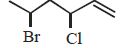
$IUPAC$ name of given compound is
$6.5\, g\, Mg$ deposits on electrolysis of $MgCl_2$ (fused) then what will be the volume of chlorine gas at $STP$ discharged at electrode ............ $\mathrm{L}$
$90\, g$ $CH_3COOH$ $(i = 0.5)$ is dissolved in $110\, g$ benzene. What will be its osmotic pressure at $300\, K$ if its density is $1.2\, g/L$ ......... $atm$.
Which shows optical isomerism ?
An aqueous solution of sodium carbonate is alkaline because sodium carbonate is a salt of
If the mass table of atomic weights were established with oxygen atom assigned a value of $100,$ the atomic weight of carbon would be
Sample of $ 2, 3-$ dibromo $-3-$ methylpentane is heated with zinc dust. The resulting product is isolated and heated with $HI$ in the presence of phosphorus. Indicate which is the structure that represent the final organic product formed in the reaction
Which of the following molecule contains one pair of non-bonding electrons
Diffusion of solvent through a semi permeable membrane is called
In the following reaction

$\begin{matrix}
   \begin{matrix}
   C{{H}_{3}}\,\,\,\,\,\,\,\, \,\, \\
   |\,\,\,\,\,\,\,\,\,\,\,\,\,\,\,\,\,\,  \\
\end{matrix}  \\
   C{{H}_{3}}-C-CH=C{{H}_{2}}  \\
   |\,\,\,\,\,\,\,\,\,\,\,\,\,\,\,\,\,\,  \\
   C{{H}_{3}}\,\,\,\,\,\,\,\, \,\,\,\, \\
\end{matrix}\,$ $\xrightarrow{{{H}_{2}}O/{{H}^{\oplus }}}$ $\underset{Major\,\,product}{\mathop{A}}\,$ $+$ $\underset{Major\,\,product}{\mathop{B}}\,$

The major product is