MCQ
Many Lanthanoid elements are used to prepare:
  • A
    Ceramic materials.
  • B
    Water softener.
  • Superconducting materials.
  • D
    Enzyme catalysts.

Answer

Correct option: C.
Superconducting materials.
Many Lanthanoid elements are used to prepare superconducting materials.
Examples include Lanthanum sesquicarbide superconductor $\mathrm{La}_2 \mathrm{C}_3​.$ Gadolinium at very low temperatures becomes highly magnetic and may function as a superconductor.

Need a full question paper?

Generate a complete, print-ready paper with questions like this in minutes — across 16+ boards, with answer keys.
Start Generating Free

Similar questions

Dehydrogenation of $\begin{array}{*{20}{c}}
  {C{H_3} - CH - C{H_3}} \\ 
  {|\,\,\,\,\,\,} \\ 
  {OH\,\,} 
\end{array}$ gives
No. of atoms in one molecule of sulphur is
Ethanol is prepared industrially by
The structure of $DNA$ is
The total change in the oxidation state of manganese involved in the reaction of $KMnO _4$ and potassium iodide in the acidic medium is $..........$.
The source of nitrogen in Gabriel synthesis of amines is $.........$
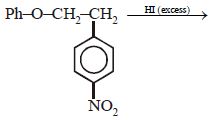
(product)
$p$-Amino- $N, N$-dimethylaniline is added to a strongly acidic solution of ${X}$. The resulting solution is treated with a few drops of aqueous solution of ${Y}$ to yield blue coloration due to the formation of methylene blue. Treatment of the aqueous solution of ${Y}$ with the reagent potassium hexacyanoferrate$(II)$ leads to the formation of an intense blue precipitate. The precipitate dissolves on excess addition of the reagent. Similarly, treatment of the solution of ${Y}$ with the solution of potassium hexacyanoferrate$(III)$ leads to a brown coloration due to the formation of ${Z}$.

$1.$ The compound ${X}$ is

$(A)$ $\mathrm{NaNO}_3$ $(B)$ $\mathrm{NaCl}$ $(C)$ $\mathrm{Na}_2 \mathrm{SO}_4$ $(D)$ $\mathrm{Na}_2 \mathrm{~S}$

$2.$ The compound ${Y}$ is

$(A)$ $\mathrm{MgCl}_2$ $(B)$ $\mathrm{FeCl}_2$ $(C)$ $\mathrm{FeCl}_3$ $(D)$ $\mathrm{ZnCl}_2$

$3.$ The compound ${Z}$ is

$(A)$ $\left.\mathrm{Mg}_2 \mid \mathrm{Fe}(\mathrm{CN})_6\right]$ $(B)$ $\operatorname{Fe}\left[\mathrm{Fe}(\mathrm{CN})_6\right]$

$(C)$ $\mathrm{Fe}_4\left[\mathrm{Fe}(\mathrm{CN})_6\right]_3$ $(D)$ $\mathrm{K}_2 \mathrm{Zn}_3\left[\mathrm{Fe}(\mathrm{CN})_6\right]_2$

Give the answer question $1,2$ and $3.$

What will be the reduction potential of $Cu$ in aqueous solution with $pH = 12$ ? If $K_{sp}$ of $Cu(OH)_2$ is $1\times10^{-19}$ and $E_{C{u^{ + 2}}/Cu}^o = 0.34\,V$ ............. $\mathrm{V}$
The metal which does not form a polynuclear carbonyl is