Question

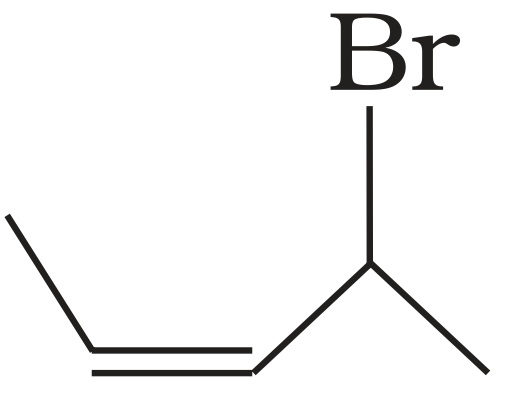
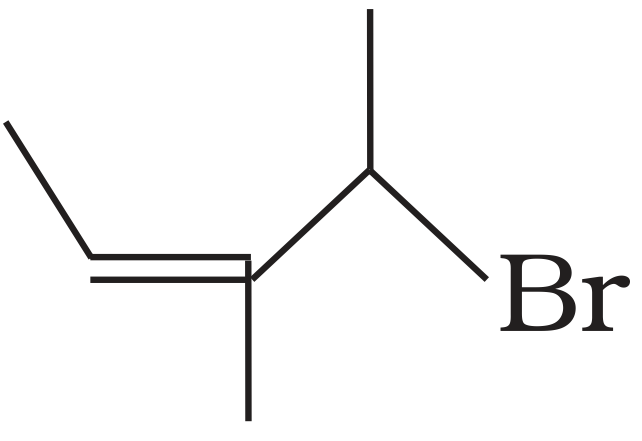
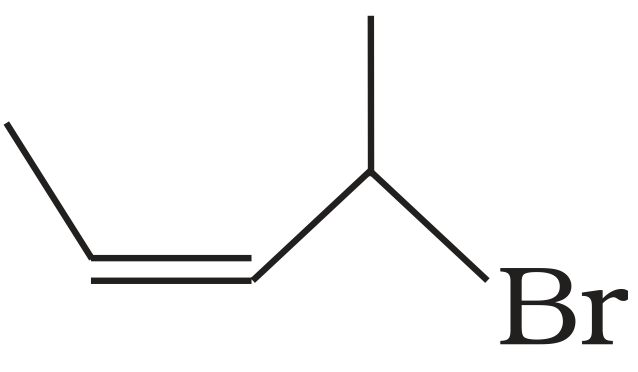
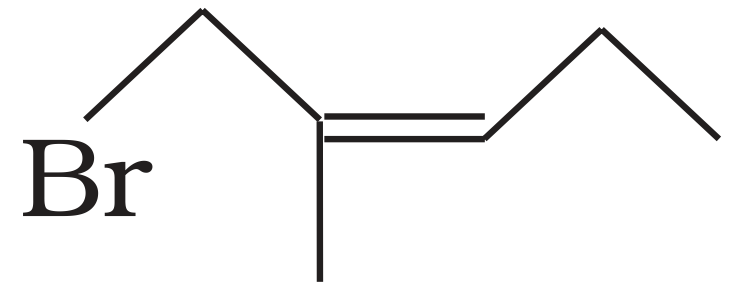
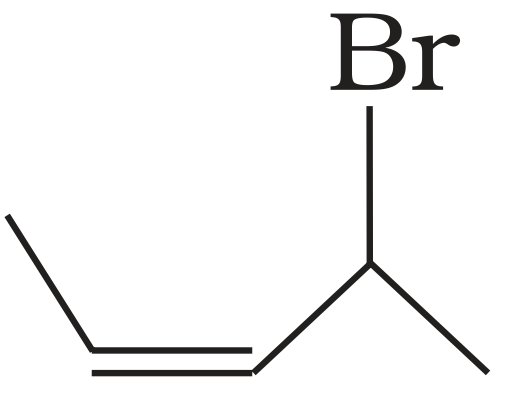
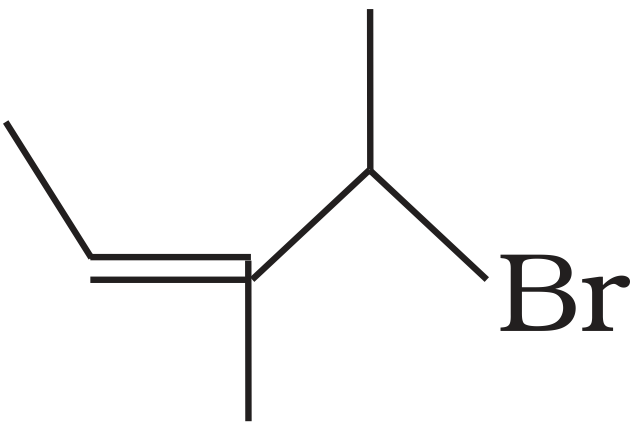
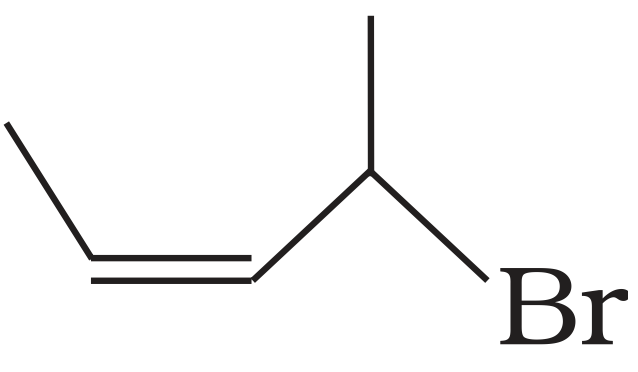
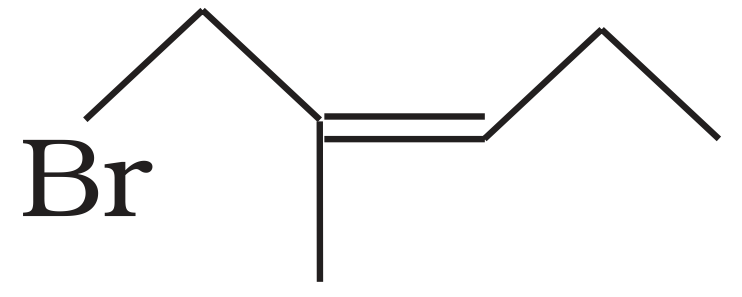
Match the structures given in Column I with the names in Column II.
  Column I   Column II
(i) (a) 4-Bromopent-2-ene
(ii) (b) 4-Bromo-3-methylpent-2-ene
(iii) (c) 1-Bromo-2-methylbut-2-ene
(iv) (d) 1-Bromo-2-methylbut-2-ene

Answer

  Column I   Column II
(i) (a) 4-Bromopent-2-ene
(ii) (c) 1-Bromo-2-methylbut-2-ene
(iii) (b) 4-Bromo-3-methylpent-2-ene
(iv) (d) 1-Bromo-2-methylbut-2-ene

Need a full question paper?

Generate a complete, print-ready paper with questions like this in minutes — across 16+ boards, with answer keys.

Start Generating Free

Similar questions

Explain nucleophilic addition reaction of aldehydes and ketones with sodium hydrogensulphite $(NaHSO_3). \#\#\#$ Explain the nucleophilic addition reaction which is useful for separation and purification of aldehydes.
How would you account for the following:
  1. Sulphur hexafluoride is less reactive than sulphur tetrafluoride.
  2. Of the noble gases only xenon forms known chemical compounds.
Action of soap is due to emulsification and micelle formation. Comment
Classify the following solids in different categories based on the nature of intermolecular forces operating in them:
Potassium sulphate, tin, benzene, urea, ammonia, water, zinc sulphide, graphite, rubidium, argon, silicon carbide.
Note: In the following questions a statement of assertion followed by a statement of reason is given. Choose the correct answer out of the following choices.
Assertion: When methyl alcohol is added to water, boiling point of water increases.
Reason: When a volatile solute is added to a volatile solvent elevation in boiling point is observed.
Explain giving reason:
Transition metals and many of their compounds show paramagnetic behaviour.
Note: In the following questions a statement of assertion followed by a statement of reason is given. Choose the correct answer out of the following choices.
Assertion: The packing efficiency is maximum for the fcc structure.
Reason: The cordination number is $12$ in $fcc$ structures.
$Fe ^{2+} \rightarrow Fe ^{3+}\left( E ^{\circ}=-0.77 V\right)$ and$Cu \rightarrow Cu ^{2+}\left( E ^{\circ}=-0.34 V\right) On$ the basis of these values, find out whether $Cu ^{2+}$ ion can be reduce by $Fe ^{2+}$ ion or not?
Write the equations involved in the following reactions:
  1. Wolff-Kishner reduction.
  2. Etard reaction.
Depict the galvanic cell in which the reaction: $Zn(s) + 2Ag^+(aq) → Zn^{2+}(aq) + 2Ag(s)$ takes place.
Further indicate what are the carriers of the current inside and outside the cell. State the reaction at each electrode.