MCQ
$\mathop {\lim }\limits_{x \to 1} \frac{{\sqrt {1 - \cos 2(x - 1)} }}{{x - 1}}$
  • A
    Exists and it equals $\sqrt 2 $
  • B
    Exists and it equals $ - \sqrt 2 $
  • C
    Does not exist because $x - 1 \to 0$
  • Does not exist because left hand limit is not equal to right hand limit
Answer

Correct option: D.
Does not exist because left hand limit is not equal to right hand limit
d
(d) $f(1 + ) = \mathop {\lim }\limits_{h \to 0} f(1 + h) = \mathop {\lim }\limits_{h \to 0} \,\,\frac{{\sqrt {1 - \cos \,\,2h} }}{h}$
$ = \mathop {\lim }\limits_{h \to 0} \,\sqrt 2 \frac{{\sin \,h}}{h} = \sqrt 2 $
$f(1 - ) = \mathop {\lim }\limits_{h \to 0} f(1 - h) = \mathop {\lim }\limits_{h \to 0} \,\,\frac{{\sqrt {1 - \cos \,( - 2h)} }}{{ - h}}$
$ = \mathop {\lim }\limits_{h \to 0} \,\sqrt 2 \frac{{\sin \,h}}{{ - h}} = - \sqrt 2 .$
$\therefore $ limit does not exist because left hand limit is not equal to right hand limit.

Need a full question paper?

Generate a complete, print-ready paper with questions like this in minutes — across 16+ boards, with answer keys.

Start Generating Free

Similar questions

If sum of $n$ terms of an $A.P.$ is $3{n^2} + 5n$ and ${T_m} = 164$ then $m = $
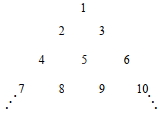
Let the positive integers be written in the form :

$Image$

If the $\mathrm{k}^{\text {th }}$ row contains exactly $\mathrm{k}$ numbers for every natural number $\mathrm{k}$, then the row in which the number $5310$ will be, is.........

Choose the correct answer. If $\tan\text{A}=\frac{1}{2},\tan\text{B}=\frac{1}{3},$ then $\tan(2\text{A + B})$ is equal to:
The smallest positive angle which satisfies the equation $2{\sin ^2}\theta + \sqrt 3 \cos \theta + 1 = 0$, is
Let for $n =1,2, \ldots \ldots, 50, S _{ a }$ be the sum of the infinite geometric progression whose first term is $n ^{2}$ and whose common ratio is $\frac{1}{(n+1)^{2}}$. Then the value of $\frac{1}{26}+\sum\limits_{n=1}^{50}\left(S_{n}+\frac{2}{n+1}-n-1\right)$ is equal to
The general value of $\theta $  that satisfies both the equations $cot^3\theta + 3 \sqrt 3 $ = $0$ & $cosec^5\theta + 32$ = $0$ is $(n \in  I)$
The number of ways in which $6$ men and $5$ women can dine at a round table if no two women are to sit together is given by
The coefficient of $x^{91}$ in the series $^{100}{C_1}\,{2^8}.\,{\left( {1\, - \,x} \right)^{99}}\, + {\,^{100}}{C_2}\,{2^7}.\,{\left( {1\, - \,x} \right)^{98}}\, + {\,^{100}}{C_3}\,{2^6}.\,{\left( {1\, - \,x} \right)^{97}}\, + \,....\, + {\,^{100}}{C_9}\,{\left( {1\, - \,x} \right)^{91}}$ is equal to -
The value of $\cos^2\Big(\frac{\pi}{6}+\text{x}\Big)-\sin^2\Big(\frac\pi6-\text{x}\Big)$ is:
The number of distinct solutions of $\sec \theta \,\, + \,\,\tan \theta \, = \,\sqrt 3 \,,\,0\,\, \leqslant \,\,\theta \,\, \leqslant \,\,2\pi$