Question
Mention three limitations of the CAS (Computerised Accounting System).

Answer

Despite many advantages offered by a computerised accounting system it is not free from limitations. Various limitations of a computerised accounting system are as follows:
  1. Staff Opposition: Introduction of computers lead to a lot of retrenchrnent as well as complication of activities which result in resistance of the staff.
  2. High Cost of Training: The sophisticated computerised accounting packages generally require specialised staff personnel, which leads to heavy amount of cost of training
  3. Adverse effects on health: The excessive use of computers may lead to various health problems like eye strains, back aches, muscular pains etc.
  4. Security Problems: Fraud and embezzlements are usually committed on a computerised accounting system through alteration of data. People responsible for tampering of data cannot be located in a computerised set up whereas the same can be easily done in case of manual records.
  5. System Problems: System failure due to hardware failures, attack by viruses, system down etc. are the usual problems faced by a computerised system.

Need a full question paper?

Generate a complete, print-ready paper with questions like this in minutes — across 16+ boards, with answer keys.
Start Generating Free

Similar questions

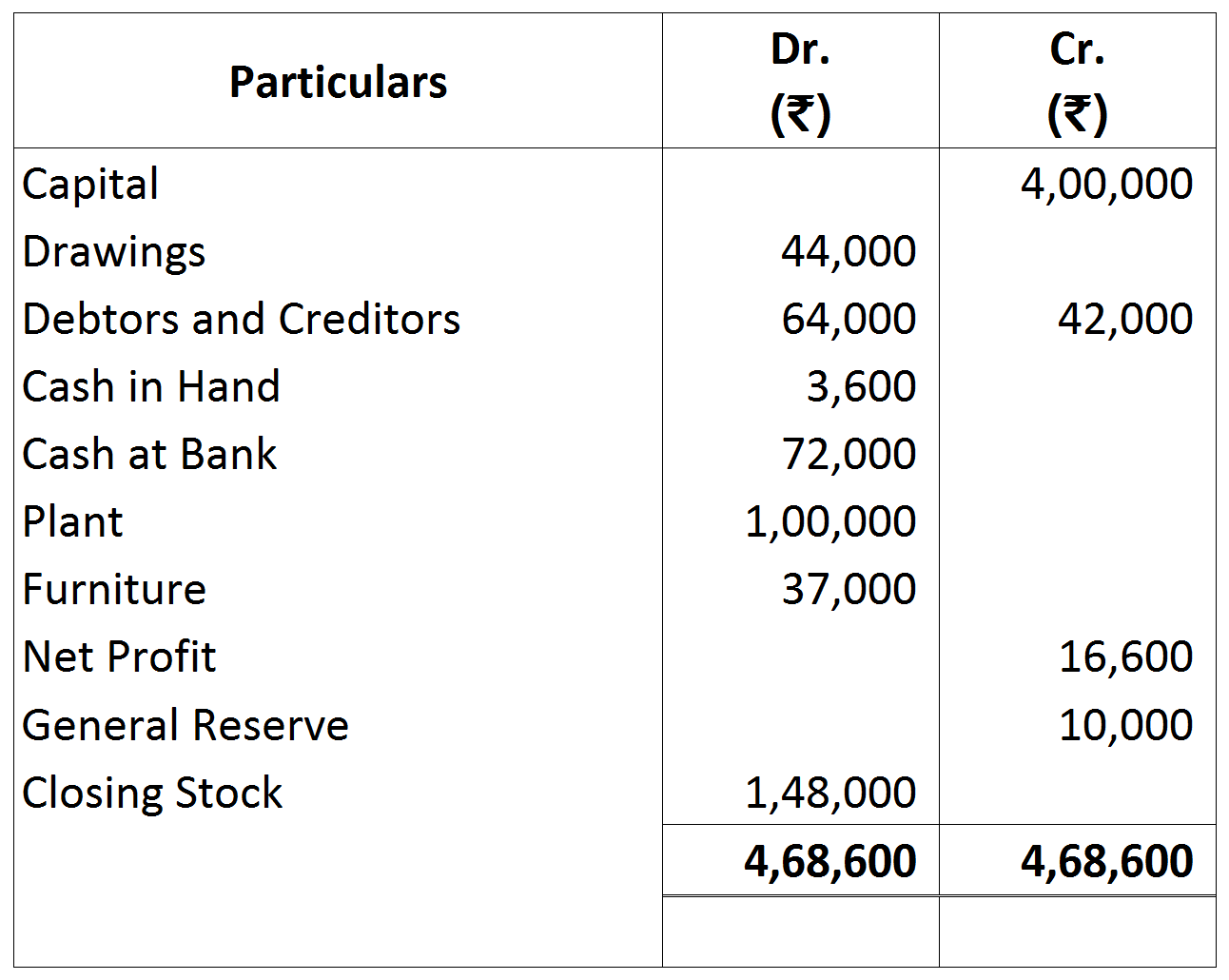
From the following particulars, prepare Balance Sheet as at $31^{st}$ March, $2019$:
Calculate Total Sales from the following information:
 
Bills Receivables as on 1st April, 2017 7,800
Debtors as on 1st April, 2017 30,800
Cash received on maturity of Bills Receivable during the year 20,900
Cash received from Debtors 70,000
Bad Debts written off 4,800
Returns Inward 8,700
Bills Receivable dishonoured 1,800
Bills Receivable on 31st March, 2018 6,000
Debtors as on 31st March, 2018 25,500
Cash Sales during the year 15,900
Rectify the following errors:
  1. Sale of old furniture worth ₹ 3,000 treated as sales of goods.
  2. Sales Book added ₹ 5,000 short.
  3. Rent of proprietor’s residence, ₹ 6,500 debited to Rent Account.
  4. Goods worth ₹ 11,970 returned by Manav posted to his debit as ₹ 11,790.
Give rectifying entries for the following:
  1. ₹ 5,400 received from Mr. A was posted to the debit of his account.
  2. The total of Sales Return Book overcasted by ₹ 800.
  3. ₹ 2,740 paid for repairs to motor car was debited to Motor Car Account as ₹ 1,740.
  4. Returned goods to Shyam ₹ 1,500 were passed through Returns Inward Book.
From the following information ascertain the opening balance of sundry debtors and closing balance of sundry creditors
 
Opening stock, 30,000
Closing stock, 25,000
Opening creditors, 50,000
Closing debtors, 75,000
Discount allowed by creditors, 15,00
Discount allowed to customers, 2,500
Cash paid to creditors, 1,35,000
Bills payable accepted during the period, 30,000
Bills receivable received during the period, 75,000
Cash received from customers, 2,20,000
Bills receivable dishonoured, 3,500
Purchases, 2,95,000
The rate of gross profit is 25% on selling price and out of the total sales 85,000 was for cash sales.
Total sales $=4,00,000=3,00,000\times\frac{100}{75}$
Following balances appear in the Trial Balance of a firm as on $31^{st}$ March, $2019$:
 
 
Opening Stock:
Raw Material
80,000
 
Finished Goods
1,40,000
Purchases
 
3,60,000
Sales
 
7,00,000
Returns:
Purchases
10,000
 
Sales
6,000
Wages
 
1,30,000
Factory Expenses
 
90,000
Freight:
Inwards
20,000
 
Outwards
30,000
At the end of the accounting period, stock was:
 
Raw Materials
 
70,000
Work-in-Process
 
20,000
Finished Goods
 
1,10,000
Prepare Trading Account of the firm.
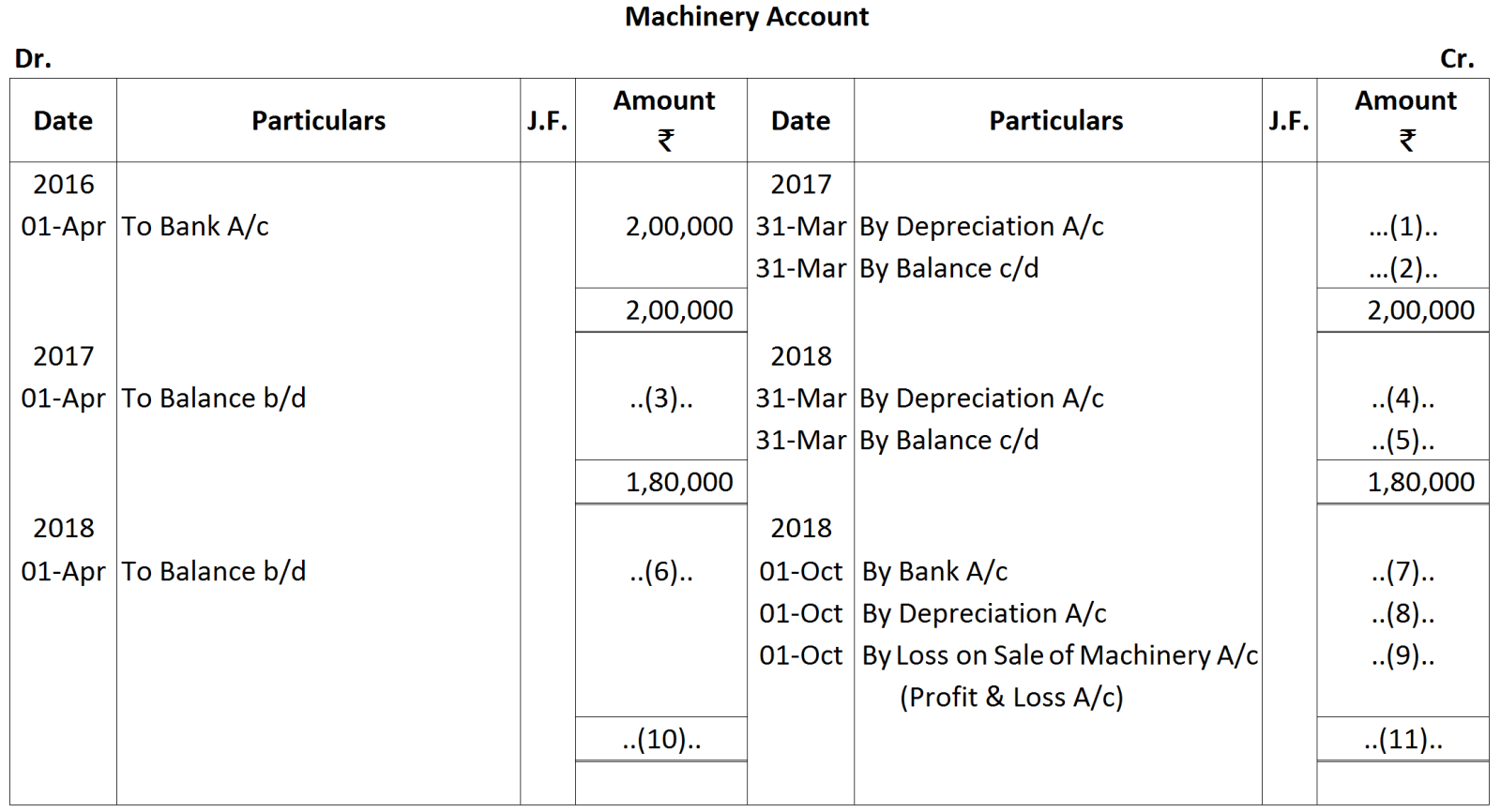
In the following Machinery Account, determine the missing values, if depreciation is to be charged @ 10% p.a. on the Original Cost. On 1st October, 2018, the machinery was sold for ₹ 1,20,000.
Explain the method of posting a Petty Cash Book.
Define a Trial Balance. Why is it prepared?
What do you understand by Readymade or Off-the-Shelf Software?