Question
Method to Find the Sets When Cartesian Product is Given
For finding these two sets, we write first element of each ordered pair in first set say $A$ and corresponding second element in second set $B\ ($say$)$.
Number of Elements in Cartesian Product of Two Sets
If there are $p$ elements in set $A$ and $q$ elements in set $B$, then there will be pq elements in $A \times B$ i.e. if $n(A)=p$ and $n(B)=q$, then $n(A \times B)=p q$.
$i$. The Cartesian product $A \times A$ has $9$ elements among which are found $(-1,0)$ and $(0,1)$. Find the set $A$ and the remaining elements of $A \times A. (1)$
$ii. A$ and $B$ are two sets given in such a way that $A \times B$ contains $6$ elements. If three elements of $A \times B$ are $(1, 3 ), (2,5)$ and $(3, 3),$ then find the remaining elements of $A \times B. (1)$
$iii$. If the set $A$ has $3$ elements and set $B$ has $4$ elements, then find the number of elements in $A \times B$. $(2)$
OR
If $A \times B=\{(a, 1),(b, 3),(a, 3),(b, 1),(a, 2),(b, 2)\}$. Find $A$ and $B .(2)$
Answer

$i.$ Let the Priyanka visits four cities Delhi, Lucknow, Agra, Meerut are respectively $A, B, C$ and $D$.
Number of way's in which Priyanka can visit four cities $A, B, C$ and $D$ is $4 !$ i.e. $24$
$\therefore A=\{a, b\}$ and $B=\{1,2,3\}$
$\therefore n ( S )=24$
Clearly, sample space for this experiment is
$S =\left\{\begin{array}{l}A B C D, A B D C, A C B D, A C D B, A D B C, A D C B \\ B A C D, B A D C, B C A D, B C D A, B D A C, B D C A \\ C A B D, C A D B, C B A D, C B D A, C D A B, C D B A, \\ D A B C, D A C B, D C A B, D C B A, D B A C, D B C A\end{array}\right\}$
Let $E _1$ be the event that Priyanka visits $A$ before $B$ .
Then,
$E_1=\{A B C D, A B D C, A C B D, A C D B, A D B C, A D C B,$
$ C A B D, C A D B, C D A B, D A B C, D A C B, D C A B\}$
$\Rightarrow n \left( E _1\right)=12$
$\therefore P ($ she visits $A$ before $B )= P \left( E _1\right)=\frac{n\left(E_1\right)}{n(S)}=\frac{12}{24}=\frac{1}{2}$
$ii$. Let the Priyanka visits four cities Delhi, Lucknow, Agra, Meerut are respectively $A, B, C$ and $D$.
Number of way's in which Priyanka can visit four cities $A, B, C$ and $D$ is $4!$ i.e. $24$
$\therefore n ( S )=24$
Clearly, sample space for this experiment is
$S =\left\{\begin{array}{l}A B C D, A B D C, A C B D, A C D B, A D B C, A D C B \\ B A C D, B A D C, B C A D, B C D A, B D A C, B D C A \\ C A B D, C A D B, C B A D, C B D A, C D A B, C D B A, \\ D A B C, D A C B, D C A B, D C B A, D B A C, D B C A\end{array}\right\}$
$ E _1=\{ ABCD , ABDC , ACBD , ACDB , ADBC , ADCB ,$
$ CABD , CADB , CDAB , DABC , DACB , DCAB \}$
$\Rightarrow n \left( E _1\right)=12$
$\therefore P ($she visits $A$ before $ B )=P\left(E_1\right)=\frac{n\left(E_1\right)}{n(S)}=\frac{12}{24}=\frac{1}{2}$
$iii$. Let the Priyanka visits four cities Delhi, Lucknow, Agra, Meerut are respectively $A, B, C$ and $D$.
Number of way's in which Priyanka can visit four cities $A, B, C$ and $D$ is $4!$ i.e. $24$
$\therefore n ( S )=24$
Clearly, sample space for this experiment is 
$S =\left\{\begin{array}{l}A B C D, A B D C, A C B D, A C D B, A D B C, A D C B \\ B A C D, B A D C, B C A D, B C D A, B D A C, B D C A \\ C A B D, C A D B, C B A D, C B D A, C D A B, C D B A, \\ D A B C, D A C B, D C A B, D C B A, D B A C, D B C A\end{array}\right\}$
Let $E _3$ be the event that she visits $A$ first and $B$ last.
Then,
$E_3=\{ ACDB , ADCB \}$
$n\left(E_3\right)=2$
$\because P($ she visits $A$ first and $B$ last $)=P\left(E_3\right)$
$=\frac{n\left(E_3\right)}{n(S)}=\frac{2}{24}=\frac{1}{12}$
OR
Let the Priyanka visits four cities Delhi, Lucknow, Agra, Meerut are respectively $A, B, C$ and $D$.
Number of way's in which Priyanka can visit four cities $A, B, C$ and $D$ is $4!$ i.e. $24$
$\therefore n ( S )=24$
Clearly, sample space for this experiment is
$S =\left\{\begin{array}{l}A B C D, A B D C, A C B D, A C D B, A D B C, A D C B \\ B A C D, B A D C, B C A D, B C D A, B D A C, B D C A \\ C A B D, C A D B, C B A D, C B D A, C D A B, C D B A, \\ D A B C, D A C B, D C A B, D C B A, D B A C, D B C A\end{array}\right\}$
Let $E _4$ be the event that she visits $A$ either first or second.
Then, $E_4=\{A B C D, A B D C, A C B D, A C D B, A D B C, A D C B,$
$ B A C D, B A D C, C A B D, C A D B, D A B C, D A C B\}$
$\Rightarrow n\left(E_4\right)=12$
Hence $, P ($she visits $A$ either first or second$)$
$=P\left(E_4\right)=\frac{n\left(E_4\right)}{n(S)}=\frac{12}{24}=\frac{1}{2}$


Need a full question paper?

Generate a complete, print-ready paper with questions like this in minutes — across 16+ boards, with answer keys.

Start Generating Free

Similar questions

Consider the data
$x_i$ $4$ $8$ $11$ $17$ $20$ $24$ $32$
$f _{ i }$ $3$ $5$ $9$ $5$ $4$ $3$ $1$
$i.$ Find the standard deviation. $(1)$
$ii.$ Find the variance.$ (1)$
$iii$. Find the mean. $(2)$
$OR$
Write the formula of variance? $(2)$
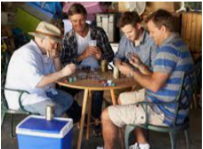
Four friends Dinesh, Yuvraj, Sonu, and Rajeev are playing cards. Dinesh, shuffling a cards and told to Rajeev choose any four cards. 
Image
$i$. What is the probability that Rajeev getting all face card. $(1)$
$ii$. What is the probability that Rajeev getting two red cards and two black card. $(1)$
$iii$. What is the probability that Rajeev getting one card from each suit. $(2)$
OR
What is the probability that Rajeev getting two king and two Jack cards. $(2)$
The conjugate of a complex number $z$, is the complex number, obtained by changing the
sign of imaginary part of $z$ . It is denoted by $\bar{z}$.
The modulus $($or absolute value$)$ of a complex number, $z = a +$ ib is defined as the non
negative real number
$\sqrt{a^2+b^2}$. It is denoted by $|z|$. i.e.
$|z|=\sqrt{a^2+b^2}$
Multiplicative inverse of $z$ is $\frac{\bar{z}}{|z|^2}$. It is also called reciprocal of $z .$
$z \bar{z}=|z|^2$
$i.$ If $f(z)=\frac{7-z}{1-z^2}$, where $z=1+2 i$, then find $|f(z)|. ( 1 )$
$ii.$ Find the value of $(z+3)(\bar{z}+3). (1)$
$iii.$ If ( $x-i y)(3+5 i)$ is the conjugate of $-6-24 i$, then find the value of $x+y. (2)$
OR
If $z=3+4 i$, then find $\bar{z}. (2)$
We have, $i=\sqrt{-1}$. So, we can write the higher powers of $i$ as follows
(i) $i^2=-1$
(ii) $i^3=i^2 \cdot i=(-1) \cdot i=-i$
(iii) $i^4=\left(i^2\right)^2=(-1)^2=1$
(iv) $i^5=i^{4+1}=i^4 \cdot i=1 \cdot i=i$
(v) $i^6=i^{4+2}=i^4 \cdot i^2=1 \cdot i^2=-1$

In order to compute $i^n$ for $n>4$, write $i^n=i^{4 q+r}$ for some $q, r \in N$ and $0 \leq r \leq 3$. Then, $i^n=$ $i^{4 q} \cdot i^r=\left(i^4\right)^q \cdot i^r=(1)^q \cdot i^r=i^r$.
In general, for any integer $k, i^{4 k}=1, i^{4 k+1}=i, i^{4 k+2}=-1$ and $i^{4 k+3}=-i$.

On the basis of above information, answer the following questions.

(i) The value of $i^{37}$ is equal to
    (a) $i$     (b) $-i$     (c) 1     (d) -1

(ii) The value of $i^{-30}$ is equal to
    (a) $i$     (b) 1     (c) -1     (d) $-i$

(iii) If $z=i^9+i^{19}$, then $z$ is equal to
    (a) $0+0 i$     (b) $1+0 i$     (c) $0+i$     (d) $1+2 i$

(iv) The value of $\left[i^{19}+\left(\frac{1}{i}\right)^{25}\right]^2$ is equal to
    (a) -4     (b) 4     (c) $\mathrm{i}$     (d) 1

(v) If $z=i^{-39}$, then simplest form of $z$ is equal to
    (a) $1+0 i$     (b) $0+i$     (c) $0+0 i$     (d) $1+i$
The school organised a cultural event for $100$ students. In the event, $15$ students participated in dance, drama and singing. $25$ students participated in dance and drama; $20$ students participated in drama and singing; $30$ students participated in dance and singing. $8$ students participated in dance only; $5$ students in drama only and $12$ students in singing only.

Based on the above information, answer the following questions.
  1. The number of students who participated in dance, is:
  1. $18$
  2. $30$
  3. $40$
  4. $48$
  1. The number of students who participated in drama, is:
  1. $35$
  2. $30$
  3. $25$
  4. $20$
  1. The number of students who participated in singing, is:
  1. $42$
  2. $45$
  3. $47$
  4. $37$
  1. The number of students who participated in dance and drama but not in singing, is:
  1. $20$
  2. $5$
  3. $10$
  4. $15$
  1. The number of students who did not participate in any of the events, is:
  1. $20$
  2. $30$
  3. $25$
  4. $35$
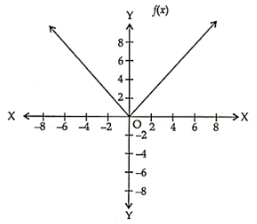
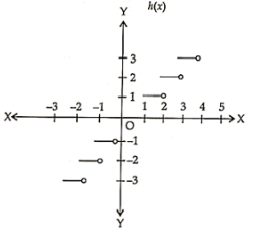
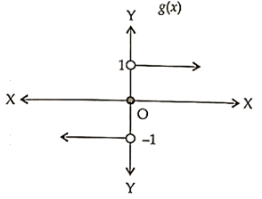
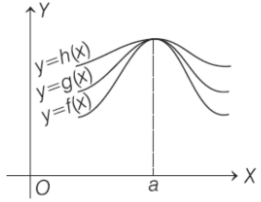
Consider the graphs of the functions f(x), h(x) and g(x). 
Image
Image
Image

i. Find the range of h(x). (1)
ii. Find the domain of f(x). (1)
iii. Find the value of f(10). (2)
OR
Find the range of g(x). (2)
To find the limits of trigonometric functions, we use the following theorems
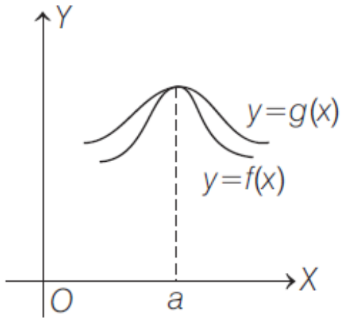
Theorem 1: Let $f$ and $g$ be two real valued functions with the same domain such that $f(x) \leq g(x)$ for all $x$ in the domain of definition. For some real number $a$, if both $\lim _{x \rightarrow a} f(x)$ and $\lim _{x \rightarrow a} g(x)$ exist, then
$
\lim _{x \rightarrow a} f(x) \leq \lim _{x \rightarrow a} g(x) .
$
This is shown in the figure
Image

Theorem 2 (Sandwich theorem) : Let $f, g$ and $h$ be real functions such that $f(x) \leq g(x) \leq h(x)$ for all $x$ in the common domain of definition. For some real number $a$, if $\lim _{x \rightarrow a} f(x)=l=\lim _{x \rightarrow a} h(x)$, then $\lim _{x \rightarrow a} g(x)=l$.

This is shown in the figure
Image

Theorem 3 : Three important limits are
(i) $\lim _{x \rightarrow 0} \frac{\sin x}{x}=1$
(ii) $\lim _{x \rightarrow 0} \frac{\frac{x}{1-\cos x}}{x}=0$
(iii) $\lim _{x \rightarrow 0} \frac{\tan ^x x}{x}=1$

Based on above information, answer the following questions.

(i) $\lim _{x \rightarrow 0} \frac{\sin 3 x}{5 x}$ is equal to
    (a) $\frac{1}{5}$     (b) $\frac{2}{5}$     (c) $\frac{3}{5}$     (d) $\frac{4}{5}$

(ii) $\lim _{\theta \rightarrow b} \frac{\tan (\theta-b)}{\theta-b}$ is equal to
    (a) 0     (b) 1     (c) 2     (d) 3

(iii) $\lim _{x \rightarrow 0} \frac{\tan 2 x-\sin 2 x}{x^3}$ is equal to
    (a) 4     (b) 3     (c) 2     (d) 1

(iv) $\lim _{x \rightarrow 0} \frac{2 \sin x-\sin 2 x}{x^3}$ is equal to
    (a) 0     (b) 1     (c) 2     (d) 3

(v) $\lim _{x \rightarrow \frac{\pi}{4}} \frac{\sin x-\cos x}{x-\frac{\pi}{4}}$ is equal to
    (a) $\sqrt{2}$     (b) 3     (c) 1     (d) $\sqrt{3}$
For a group of $200 $ candidates, the mean and the standard deviation of scores were found to be $40$ and $15 ,$ respectively. Later on it was discovered that the scores of $43$ and $35$ were misread as $34$ and $53,$ respectively.
Student English Hindi S.st Science Maths
Ramu $39$ $59$ $84$ $80$ $41$
Rajitha $79$ $92$ $68$ $38$ $75$
Komala $41$ $60$ $38$ $71$ $82$
Patil $77$ $77$ $87$ $75$ $42$
Pursi $72$ $65$ $69$ $83$ $67$
Gayathri $46$ $96$ $53$ $71$ $39$
$i.$ Find the correct variance. $(1)$
$ii$. What is the formula of variance. $(1)$
$iii.$  Find the correct mean. $(2)$​​​​​​​
OR
Find the sum of correct scores.$ (2)$
Read the following text carefully and answer the questions that follow:
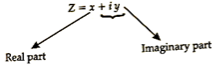
A number of the form $Z=x+i y$, where $x$ and $y$ are real and $i=\sqrt{-1}$ is called a complex number. Consider the complex number $Z_1=2+3 i$ and $Z_2=4-3 i$.
Image
$i$. Find the imaginary part of $Z_1 \overline{Z_1}... (1)$
$ii$. Find the real part of $\frac{z_1}{z_2}. (1)$
$iii$. Find the imaginary part of $Z_1-Z_2. (2)$
OR
Find the real part of $Z _1. (2)$
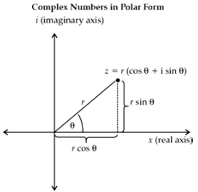
Consider the complex number $Z = 2 - 2i.$ Complex Number in Polar Form
Image
$i.$ Find the principal argument of $Z . (1)$
$ii.$ Find the value of $\bar{z} \bar{z}$ ? $(1)$
$iii.$ Find the value of $| Z |. (2)$
OR
Find the real part of $Z. (2)$