Question
Microbes can be used to decrease the use of chemical fertilisers and pesticides. Explain how this can be accomplished.

Answer

Microbes play an important role in organic farming, which is done without the use of chemical fertilizers and pesticides. Bio-fertilizers are living organisms which help increase the fertility of soil. It involves the selection of beneficial micro-organisms that help in improving plant growth through the supply of plant nutrients. Biofertilizers are introduced in seeds, roots, or soil to mobilize the availability of nutrients. Thus, they are extremely beneficial in enriching the soil with organic nutrients. Many species of bacteria and cyanobacteria have the ability to fix free atmospheric nitrogen. Rhizobium is a symbiotic bacteria found in the root nodules of leguminous plants. Azospirillium and Azotobocter are free living nitrogen-fixing bacteria, whereas Anabena, Nostoc and Oscillitoria are examples of nitrogen-fixing cyanobacteria. Bio-fertilizers are cost effective and eco- friendly. Microbes can also act as bio-pesticides to control insect pests in plants. An example of bio-pesticides is Bacillus thuringiensis, which produces a toxin that kills the insect pests. Dried bacterial spores are mixed in water and sprayed in agricultural fields. When larvae of insects feed on crops, these bacterial spores enter the gut of the larvae and release toxins, thereby it. Similarly, Trichoderma are free living fungi. They live in the roots of higher plants and protect them from various pathogens. Baculoviruses is another bio-pesticide that is used as a biological control agent against insects and other arthropods.
Need a full question paper?

Generate a complete, print-ready paper with questions like this in minutes — across 16+ boards, with answer keys.

Start Generating Free

Similar questions

Arrange the following hormones in sequence of their secretion in a pregnant woman.
hCG, LH, FSH, Relaxin.
Answer the following questions:
Write the Mendelian F2 phenotypic ratio in a dihybrid cross. State the law that he proposed on the basis of this ratio. How is this law different from the law of segregation?
(i) Define standing crop.
(ii) Explain important steps in the process of decomposition in a terrestrial ecosystem.
Describe the nature of inheritance of the ABO type of blood group in humans. In which ways does this inheritance differ from that of height of the plant in garden pea?
Using a Punnett Square, workout the distribution of phenotypic features in the first filial generation after a cross between a homozygous female and a heterozygous male for a single locus.
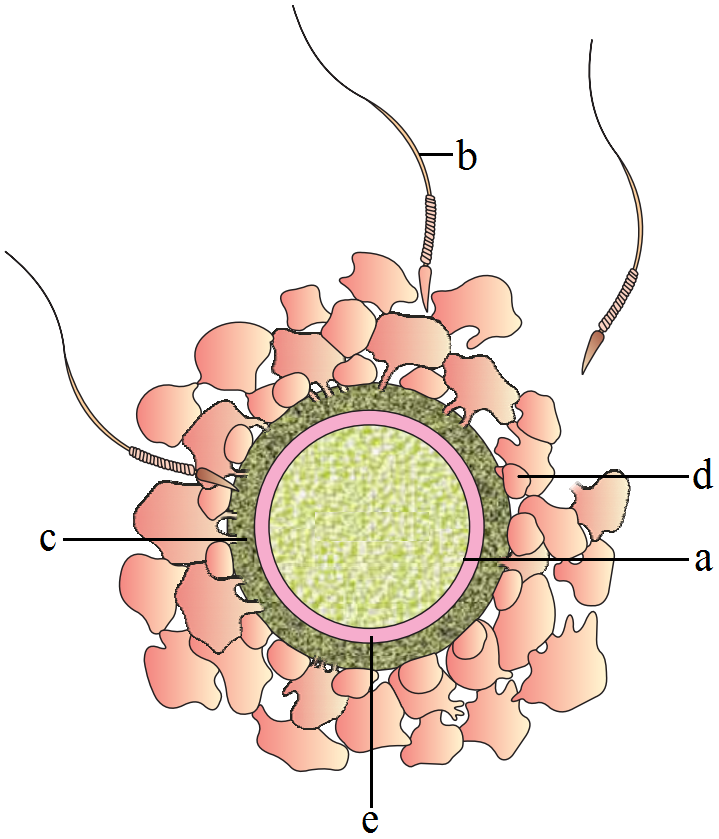
Study the illustration given and answer the questions that follow:

Name and state the function of ‘c’.

Answer the following questions:
Give a schematic representation of oogenesis in human female indicating the chromosomal number at each step. Mention at what stage of female life does each phase occur.
Pragyan takes fruits, vegetables, bread and egg curry in a day's menu. While his teacher was giving a lecture on trophic level, he got fascinated and asked following questions from his teacher.
  1. How many trophic levels does he occupy in different food chains?
  2. Represent atleast three food chains.
  3. Which among them gives him the maximum amount of energy? Give reason.
  4. What values are shown by Pragyan?
Answer the following questions with respect to recombinant DNA technology:
i. Why is plasmid considered to be an important tool in rDNA technology? From where can plasmids be isolated? (Any two sources)
ii. Explain the role of ori and selectable marker in a cloning vector.
iii. r-DNA technology cannot proceed without restriction endonuclease. Justify.
Let us assume in a given plant the genotype symbol “Y” stands for dominant yellow seed colour and “y” for recessive green seed colour; symbol “R” for round seed shape and “r” for wrinkled seeds.
Two homozygous parents (plants) with genotypes “RRYY” and “rryy” are crossed and their F1–generation progeny is then selfed. What shall be the:
  1. Phenotype of F1–progeny.
  2. Genotype of F1–progeny.
  3. Gamete genotypes of F1–progeny.
  4. Phenotypic ratio of F2 population.
  5. Phenotypic ratio of yellow seed to green seed and round seed to wrinkled seed in F2 population.