MCQ
Missing lines in a continuous spectrum reveal
  • A
    Defects of the observing instrument
  • B
    Absence of some elements in the light source
  • C
    Presence in the light source of hot vapours of some elements
  • Presence of cool vapours of some elements around the light source

Answer

Correct option: D.
Presence of cool vapours of some elements around the light source
d
When a continuous spectrum is passed through a material, some wavelengths are absorbed and thus some dark lines are formed which is called line spectrum.

This absorption is caused due to the presence of cool vapors of some elements which absorb the energy of the wavelengths.

Need a full question paper?

Generate a complete, print-ready paper with questions like this in minutes — across 16+ boards, with answer keys.

Start Generating Free

Similar questions

The width of fringe is $2\,mm$ on the screen in a double slits experiment for the light of wavelength of $400\,nm$. The width of the fringe for the light of wavelength $600\,nm$ will be $..............\,mm$
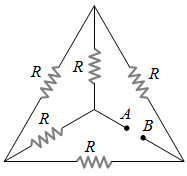
If each of the resistance of the network shown in the figure is R, the equivalent resistance between A and B is

A convex lens of focal length 84 cm is in contact with a concave lens of focal length 12 cm. The power of combination (in diopters) is
Which of the following is not true for wire wound resistor?
The magnetic field due to the earth is closely equivalent to that due to
The ratio of wavelengths of proton and deuteron accelerated by potential $V_{p}$ and $V_{d}$ is 1: $\sqrt{2}$. Then, the ratio of $V_{p}$ to $V_{d}$ will be
Match List $- I$ (Fundamental Experiment) with List $- II$ (its conclusion) and select the correct option from the choices given below the list

$\begin{array}{|p{0.35\linewidth}|p{0.55\linewidth}|} \hline List\,\,-1  & List\,\,-II\,\,  \\ \hline a\,\,Franck-Hertz\,\,Experiment & i\,\,Particle\,\,nature\,\,of\,\,light \\ \hline b\,\,Photo\,\,-electric\,\,Experiment & ii\,\,Discrete\,\,energy \,\, levels\,\,of\,\,atom \\ \hline c\,\,Davison-Germer\,\,Experiment & iii\,\,Wave\,\,nature\,\,of\,\,electron \\ \hline  & iv\,\,Structure\,\,of\,\,atom  \\ \hline \end{array}$
An electron, a doubly ionized helium ion $\left( He ^{++}\right)$ and a proton are having the same kinetic energy. The relation between their respective de$-$Broglie wavelengths $\lambda_{ e }, \lambda_{ He ^{++}}$ and $\lambda_{ P }$ is
If ${N_P}$and ${N_e}$be the numbers of holes and conduction electrons in an extrinsic semiconductor, then
In the line spectra of hydrogen atom, difference between the largest and the shortest wavelengths of the Lyman series is $304\,\mathring {A}.$ The corresponding difference for the Paschan series in $\mathring {A}$ is