MCQ
Monochromatic light passes through a prism. Compared to that in air, inside the prism the light's
  • speed and wavelength are different, but frequency remains same
  • B
    speed and frequency are different, but wavelength remains same
  • C
    wavelength and frequency are different, but speed remains same
  • D
    speed, wavelength and frequency are all different
Answer

Correct option: A.
speed and wavelength are different, but frequency remains same
a
(a)

Frequency is a characteristics of source it does not changes during refraction process.

Inside the prism wavelength and speed are reduced than that in air.

Need a full question paper?

Generate a complete, print-ready paper with questions like this in minutes — across 16+ boards, with answer keys.

Start Generating Free

Similar questions

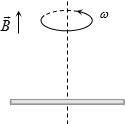
A conducting rod of length $2l$ is rotating with constant angular speed $omega$ about its perpendicular bisector. A uniform magnetic field $\overrightarrow B $ exists parallel to the axis of rotation. $The e.m.f.$ induced between two ends of the rod is
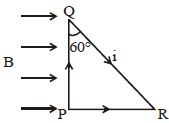
For the circuit shown in figure, the direction and magnitude of the force on $PQR$ is :-
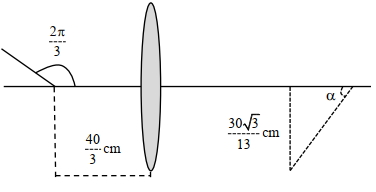
A rod of length $2 cm$ makes an angle $\frac{2 \pi}{3}$ rad with the principal axis of a thin convex lens. The lens has a focal length of $10 cm$ and is placed at a distance of $\frac{40}{3} cm$ from the object as shown in the figure. The height of the image is $\frac{30 \sqrt{3}}{13} cm$ and the angle made by it with respect to the principal axis is $\alpha$ rad. The value of $\alpha$ is $\frac{\pi}{n} rad$, where $n$ is. . . . .
A point electric dipole placed at the origin has a potential given by $V(r, \theta)=\frac{p \cos \theta}{4 \pi \varepsilon_0 r^2}$, where $\theta$ is the angle made by the position vector with the direction of the dipole. Then,
The wavelength of the matter wave is independent of
If a coil made of conducting wires is rotated between poles pieces of the permanent magnet. The motion will generate a current and this device is called
In nuclear fission, the fission reactions proceeds with a projectile. Which of the following suits the best
When the wavelength of radiation falling on a metal is changed from $500 \,nm$ to $200\, nm ,$ the maximum kinetic energy of the photoelectrons becomes three times larger. The work function of the metal is close to$.....eV$
Out of the following waves of the Sun, the wave which is used as an electrical energy is:
When photons of energy $hf$ fall on an aluminium plate (of work function $ E_0$), photoelectrons of maximum kinetic energy $K$ are ejected. If the frequency of radiation is doubled, the maximum kinetic energy of the ejected photoelectrons will be