MCQ
Most reactive compound toward Electrophilic Substitution reaction is
- A

- B
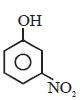
- C

- ✓
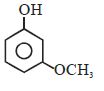
$\begin{array}{*{20}{c}}
{\,\,\,O}\\
{\,\,\,\,||}\\
{C{H_3} - C - Cl}
\end{array}$ $>$ $\begin{array}{*{20}{c}}
{O\,\,\,\,\,\,\,\,\,\,\,\,\,\,\,\,\,\,O}\\
{||\,\,\,\,\,\,\,\,\,\,\,\,\,\,\,\,\,\,\,\,\,||}\\
{C{H_3} - C - O - C - C{H_3}}
\end{array}$ $>$ $CH_3COOC_2H_5$ $>$ $CH_3CONH_2$
Generate a complete, print-ready paper with questions like this in minutes — across 16+ boards, with answer keys.
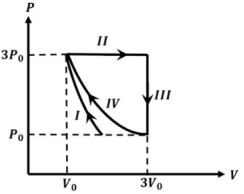
| List-$I$ | List-$II$ |
| $P$ In process $I$ | $1$ Work done by the gas is zero |
| $Q$ In process $II$ | $2$ Temperature of the gas remains unchanged |
| $R$ In process $III$ | $3$ No heat is exchanged between the gas and its surroundings |
| $S$ In process $IV$ | $4$ Work done by the gas is $6 P _0 V _0$ |
Statement - $I$: High concentration of strong nucleophilic reagent with secondary alkyl halides which do not have bulky substituents will follow $\mathrm{S}_{\mathrm{N}} 2$ mechanism.
Statement - $II$: A secondary alkyl halide when treated with a large excess of ethanol follows $\mathrm{S}_{\mathrm{N}} 1$ mechanism.
In the the light of the above statements, choose the most appropriate from the questions given below: