Question
Name the different types of Chromatography and explain the principles underlying them.

Answer

Depending on the nature of the stationary phase i.e., whether it is a solid or a liquid, chromatography is classified into adsorption chromatography and partition chromatography.
i. Adsorption chromatography: This technique is based on the principle of differential adsorption. Different solutes are adsorbed on an adsorbent to different extent.

Adsorption chromatography is further classified into two types:

  1. Column chromatography
  2. Thin-layer chromatography

ii. Partition chromatography: This technique is based on continuous differential partitioning of components of a mixture between stationary and mobile phases. For example, paper chromatography

Need a full question paper?

Generate a complete, print-ready paper with questions like this in minutes — across 16+ boards, with answer keys.
Start Generating Free

Similar questions

Write a note on the applications of analytical chemistry.
What is air?
How does dihydrogen react with various organic compounds to give useful, commercially important products?
Derive mathematically value of $K_p$ for $A_{(g)} + B_{(g)} ⇌ C_{(g)} + D_{(g)}.$
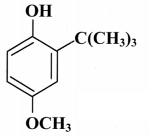
Compound $“X”$ having the following structure is used as synthetic antioxidant to increase the shelf life of packed foods.
Image
$i.$ What is the molecular formula of compound $“X”$?
$ii.$ Identify the structural unit responsible for antioxidant activity of $“X”.$
$iii.$ Give one example of a compound with structure, similar to compound $“X”,$ which is commonly used as synthetic antioxidant.
$iv.$ Give the $\text{IUPAC}$ name of compound $“X”.$
Complete the following chemical equations.
i. $\quad Li _2 CO _3 \xrightarrow{\Delta}$ $\square$ $+ CO _2$
ii. $\square$ $+6 HCl \longrightarrow 2 AlCl _3+$ $\square$
iii. $\quad A l _2 O _3+2 NaOH \longrightarrow$ $\square$ $+$ $\square$
Naina was preparing a compound in the laboratory. She added compound $‘A \ ’$ to $(CaOH)_2$ solution. As a result of this, a compound $‘B \ ’$ was obtained which had a pungent smell. On adding Nessler’s reagent to the compound $‘B \ ’,$ a brown precipitate of compound $‘C \ ’$ was obtained.
Write the chemical reactions involved and identify $‘A \ ’, ‘B \ ’$ and $‘C \ ’.$
he ionic radii of $F^–$ and $Na^+$ are $133$ and $98 \ pm$, respectively.
Explain: Qualitative analysis of organic compounds
Give reason: The increased stability of the oxidation state is lowered by 2 units than the group oxidation state in heavier p-block elements.