Question
Name the different types of solutions. Give one example of each.

Answer

Types of solution:

  1. Solid in solid.

Example: Brass.

  1. Solid in a liquid.

Example: Tincture of iodine.

  1. Liquid in liquid.

Example: ethanoic acid.

  1. Gas in a liquid.

Example: CO2 in water.

  1. Gas in gas.

Example: Air.

Need a full question paper?

Generate a complete, print-ready paper with questions like this in minutes — across 16+ boards, with answer keys.

Start Generating Free

Similar questions

Lead has greater density than iron, and both are denser than water. Is the buoyant force on a lead object greater than, or lesser than or equal to the buoyant force on an iron object of the same volume? Explain your answer giving reason.

Write the scientific names of:

  1. Prawn.
  2. House fly.
  3. Star fish.
  4. Squid.
  5. Appple snail.
  6. Fresh water mussel.
Write the formula to calculate the speed of a body moving along a circular path. Give the meaning of each symbol which occurs in it.

A cube of side 5cm is immersed in water and then in saturated salt solution. In which case will it experience a greater buoyant force. If each side of the cube is reduced to 4cm and then immersed in water, what will be the effect on the buoyant force experienced by the cube as compared to the first case for water. Give reason for each case.
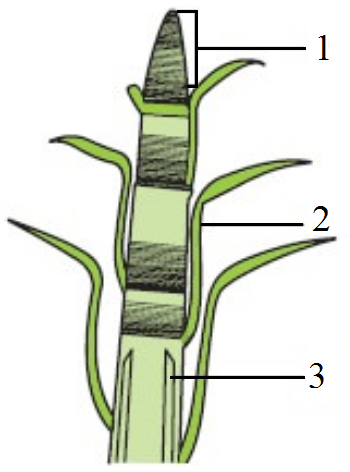
  1. Identify the figure.
  2. Labels the parts marked 1 to 3.
  3. Write the functions of parts marked 1 and 3.

A 10g bullet travelling at 200m/s strikes and remains embedded in a 2kg target which is originally at rest but free to move. At what speed does the target move off?
A gold sample contains 90% of gold and the rest copper. How many atoms of gold are present in one gram of this sample of gold?
Write down differences between nucleus and nucleoid.

What is the difference between gravitational potential energy and elastic potential energy? Give one example of a body having gravitational potential energy and another having elastic potential energy.

A body is moving uniformly in a straight line with a velocity of 5m/s. Find graphically the distance covered by it in 5 seconds.