Question
Name the main stages of translation.

Answer

The formation of a poly-peptide chain from mRNA is known as translation. The process of translation takes place on ribosome. The sequence of three nitrogen bases present in 5'-3' direction on m-RNA is called genetic code. This code determines the sequence of amino acids in a poly-peptide chain. Ribosome joins the m-RNA at 5' and when it moves towards 3', messages of DNA present as codon in m-RNA are translated.
The process of translation is completed in following steps :
1. Activation of Amino acids
2. Charging of t-RNA
3. Initiation
4. Elongation of polypeptide chain
5. Termination of polypeptide chain

Need a full question paper?

Generate a complete, print-ready paper with questions like this in minutes — across 16+ boards, with answer keys.
Start Generating Free

Similar questions

Describe biopiracy.
Write any four main features of the structure of double helical DNA.
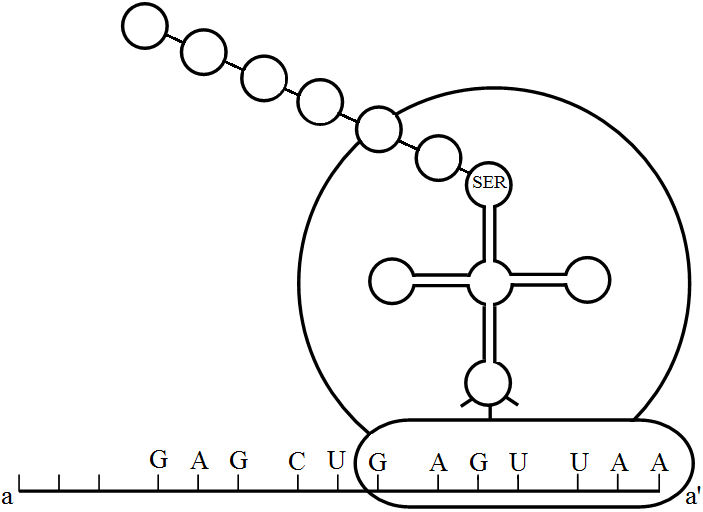
  1. Identify the polarity of strand in the diagram from a to a', and mention how many more amino acids can be expected to be added to this polypeptide chain.
  2. Mention the DNA sequence coding for serine and the anticodon of tRNA for the same amino acid.
  3. Why are some untranslated sequence of bases seen in mRNA coding for a polypeptide?
Where exactly are they present on mRNA?
Diagrammatically represent the asexual reproduction in Amoeba.
Name the type of curve that characterizes most populations growing in favourable environment. Define carrying capacity.
Enlist the steps involved in inbreeding of cattle. Suggest two disadvantages of this practice.
Answer the following questions:
What is meant by ADA deficiency? How is gene therapy a solution to this problem? Why is it not a permanent cure?
  1. What are meiocytes?
  2. If the chromosome number in meiocytes of human beings, housefly, potato, apple, dog and maize are 46, 12, 48, 34,78 and 20, respectively. What will be the chromosome numbers in gametes of these species?
Community service department of your school plans a visit to a slum area near the school with an objective to educate the slum dwellers with respect to health and hygiene.
  1. Why is there a need to organise such visits?
  2. Write the steps you will highlight as a member of this department, in your interactions with them to enable them to lead a healthy life.
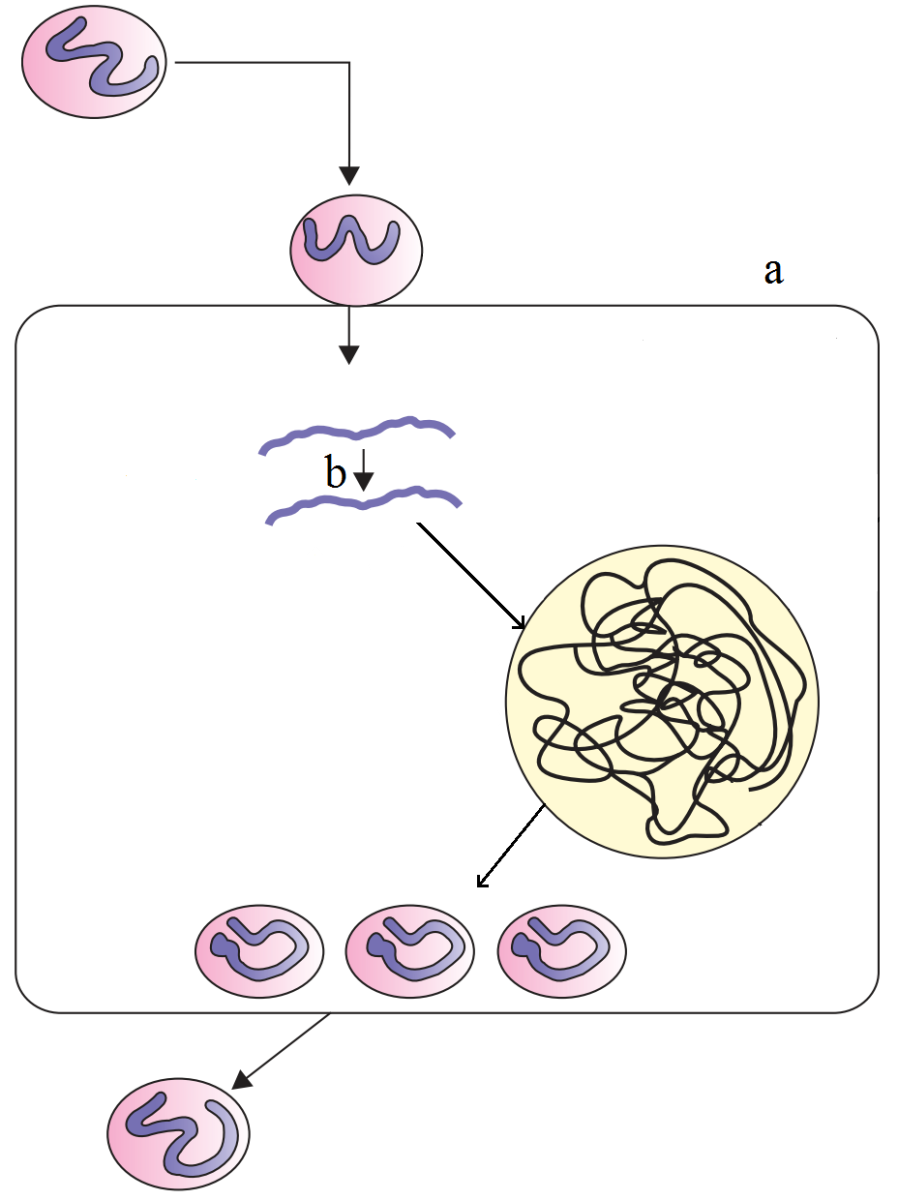
  1. What does this diagrammatic sketch depict?
  2. Identify 'a' and 'b'.
  3. Name the widely used diagnostic test when a person gets this disease.
​​​​​​​