Question
Name the major enzymes involved in DNA replication.

Answer

The enzymes participating in DNA replication are as follows :
(i) Helicase enzymes : Open the double helix of DNA.
(ii) S.S.B. proteins keep the position stable by associating with single stranded binding proteins.
(iii) Topoisomerase enzymes : Reduce the coiling tension.
(iv) RNA polymerase or primase enzyme (R.N.A. primer) : make small part of RNA to process DNA synthesis.
(v) DNA polymerase III enzyme : work to advance the primer in 5'-3' direction.
(vi) DNA Polymerase I : Fills the spaces found between the DNA.
(vii) Ligase enzymes : Join the DNA fragments.
(viii) Endonuclease and exonuclease enzymes : work to connect the correct nucleotides.

Need a full question paper?

Generate a complete, print-ready paper with questions like this in minutes — across 16+ boards, with answer keys.
Start Generating Free

Similar questions

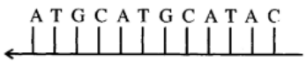
i. Construct a complete transcription unit with promotor and terminator on the basis of the hypothetical template strand given below.
Image
ii. Write the RNA strand transcribed from the above transcription unit along with its polarity.
A non–haemophilic couple was informed by their doctor that there is possibility of a haemophilic child be born to them. Explain the basis on which the doctor conveyed this information. Give the genotypes and the phenotypes of all the possible children who could be born to them.
Draw a labelled diagram of a section through ovary.
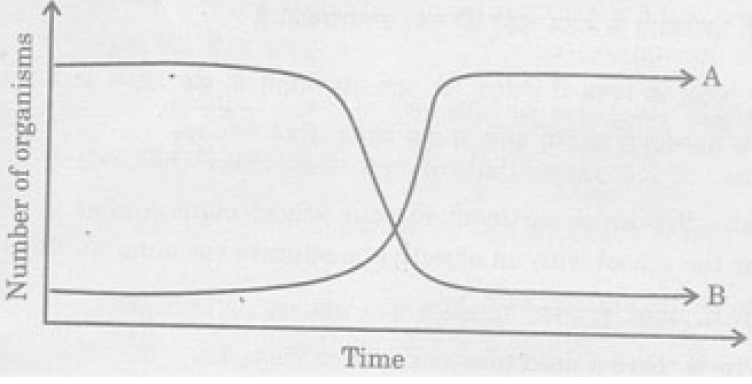
Two types of aquatic organisms in a lake show specific growth patterns as shown below, in a brief period of time. The lake is adjacent to an agricultural land extensively supplied with fertilizers.
Answer the questions based on the facts given above:
  1. Name the organisms depicting the patterns A and B.
  2. State the reason for the growth pattern seen in A.
  3. Write the effects of the growth patterns seen above.
Ankit attended a blood donation camp to donate blood and came to know that he was HIV positive. He lost interest in studies knowing that. He remained absent from school for a long time. The biology teacher visited his house and talked to him. Ankit started coming to school again and showed interest in studies.
  1. A person detected to be HIV positive should be isolated by the society. Do you agree? Why/ why not?
  2. Write the processes through which, AIDS does not spread.
  3. Who are at higher risk of encountering AIDS?
  4. What sense of responsibility did the biology teacher exhibit?
Co-evolution is a spectacular example of mutualism between an animal and a plant. Describe co-evolution with the help of an example.
  1. Explain the significance of 'palindromic nucleotide sequence' in the formation of recombinant DNA.
  2. Write the use of restriction endonuclease in the above process.
List six advantages of "ex-situ" approach to conservation of biodiversity.
Name the type of curve that characterises most populations growing in favourable environment. Define carrying capacity.
Outline how restriction enzymes are used for removing sections of DNA from a chromosome.