MCQ
Neutrino is a particle which
  • A
    Has no charge and no spin
  • Has no charge but has spin
  • C
    Is charged like an electron and has spin
  • D
    Has no charge but has mass nearly equal to that of a proton

Answer

Correct option: B.
Has no charge but has spin
b
(b)

Need a full question paper?

Generate a complete, print-ready paper with questions like this in minutes — across 16+ boards, with answer keys.
Start Generating Free

Similar questions

Mark the correct statements for a particle going on a straight line
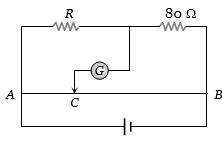
$AB$ is a wire of uniform resistance. The galvanometer $G$ shows no current when the length $AC = 20\,cm$ and $CB = 80\, cm$. The resistance $R$ is equal to .............. $\Omega $
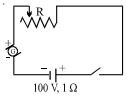
The battery in the diagram is to be charged by the generator $G$. The generator has a terminal voltage of $120$ $\mathrm{volts}$ when the charging current is $10$ $\mathrm{amperes}.$ The battery has an $\mathrm{emf}$ of $100$ $\mathrm{volts}$ and an internal resistance of $1$ $\mathrm{ohm}.$ In order to charge the battery at $10$ $\mathrm{amperes}$ charging current, the resistance $R$ should be set at ................ $\Omega$
Stress to strain ratio is equivalent to
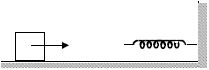
A one kg block moves towards a light spring with a velocity of $8\, m/s$. When the spring is compressed by $3\, m$, its momentum becomes half of the original momentum. Spring constant of the spring is :-
If we observe the single slit Fraunhofer diffraction with wavelength $\lambda$ and slit width $e$, the width of the central maxima is $2$$\theta$. On decreasing the slit width for the same $\lambda$
A flywheel rotates about an axis. Due to friction at the axis, it experiences an angular retardation proportional to its angular velocity. If its angular velocity falls to half while it makes $n$ rotations, how many more rotations will it make before coming to rest?
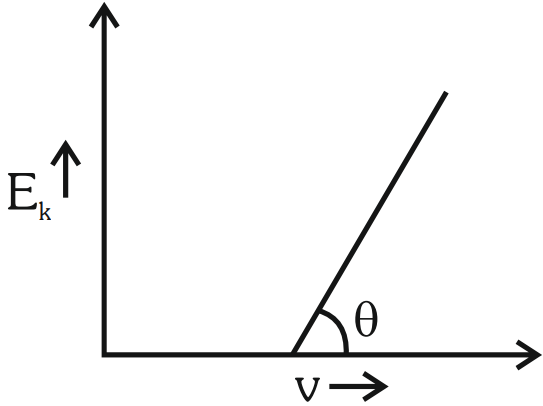
For the photoelectric effect, the maximum kinetic energy $\left(E_k\right)$ of the photoelectrons is plotted against the frequency $(v)$ of the incident photons as shown in figure. The slope of the graph gives

Image
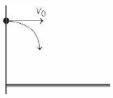
Two balls of mass $M$ and $2 \,M$ are thrown horizontally with the same initial velocity $v_{0}$ from top of a tall tower and experience a drag force of $-k v(k > 0)$, where $v$ is the instantaneous velocity. then,
A rod of length $l$ is oscillating as a physical pendulum about one of its end with small angular amplitude $\alpha$ in a crossed magnetic field $B.$ The maximum $emf$ induced in the rod will be :-