Question
No work is done by a force on an object if:
  1. The force is always perpendicular to its velocity.
  2. The force is always perpendicular to its acceleration.
  3. The object is stationary but the point of application of the force moves on the object.
  4. The object moves in such a way that the point of application of the force remains fixed.
Answer

Get the step-by-step solution for this question inside the Vidyadip app.

Get the answer in the app

Need a full question paper?

Generate a complete, print-ready paper with questions like this in minutes — across 16+ boards, with answer keys.

Start Generating Free

Similar questions

The magnetic field at the origin due to a current element $\text{i}\text{d}\ \vec{\text{l}}$ placed at a position $\overrightarrow{\text{r}}$ is:
  1. $\frac{\mu_0\text{i}}{4\pi}\frac{\text{d}\overrightarrow{\text{l}}\times\overrightarrow{\text{r}}}{\text{r}^3}$
  2. $-\frac{\mu_0\text{i}}{4\pi}\frac{\overrightarrow{\text{r}}\times​​\text{d}\overrightarrow{\text{l}}}{\text{r}^3}$
  3. $\frac{\mu_0\text{i}}{4\pi}\frac{\overrightarrow{\text{r}}\times​​\text{d}\overrightarrow{\text{l}}}{\text{r}^3}$
  4. $-\frac{\mu_0\text{i}}{4\pi}\frac{\text{d}\overrightarrow{\text{l}}\times\overrightarrow{\text{r}}}{\text{r}^3}$
The magnetising field required to be applied in opposite direction to reduce residual magnetism to zero is called:
In Bohr model of hydrogen atom, let P.E. represents potential energy and T.E. represents the total energy. In going to a higher level:

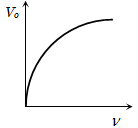
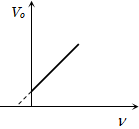
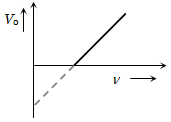
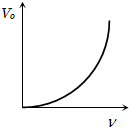
For a photoelectric cell the graph showing the variation of cut of voltage (Vo) with frequency (n) of incident light is best represented by

(a)

(b)

(c)

(d)

Name a device which is commonly used to convert an electric signal into a visual signal:
Suppose potential energy between electron and proton at separation r is given by U = K ln (r), where K is a constant. For such a hypothetical hydrogen atom, the ratio of energy difference between energy levels (n = 1 and n = 2) and (n = 2 and n = 4) is?

Consider the points lying on a straight line joining two fixed opposite charges. Between the charges there is

(a) No point where electric field is zero

(b) Only one point where potential is zero

(c) Only one point where electric field is zero

(d) a, b

Which logic gate is represented by following diagram

(a) AND

(b) OR

(c) NOR

(d) XOR

In Bohr’s model electrons are revolving in a circular orbits around the nucleus called as:
A closed cubical box is completely filled with water and is accelerated horizontally towards right with an acceleration α. The resultant normal force by the water on the top of the box.
  1. Passes through the centre of the top.
  2. Passes through a point to the right of the centre.
  3. Passes through a point to the left of the centre.
  4. Pecomes zeros.