Question
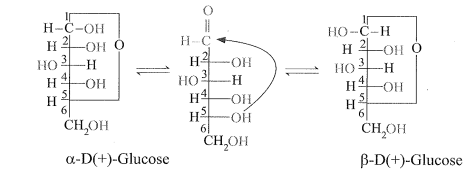
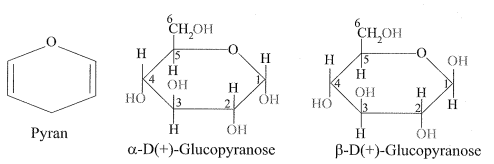
Note on: Cyclic structure of glucose.

Need a full question paper?

Generate a complete, print-ready paper with questions like this in minutes — across 16+ boards, with answer keys.
Start Generating Free

Similar questions

Account for the following observations:
  1. pKb for aniline is more than that for methylamine.
  2. Methylamine solution in water reacts with ferric chloride solution to give a precipitate of ferric hydroxide.
  3. Aniline does not undergo Friedel-Crafts reaction.
Nitric oxide, NO, reacts with oxygen to produce nitrogen dioxide.
$\text{2NO(g)+O}_2(\text{g)}\rightarrow\text{2NO}_2\text{(g)}$
The rate law for this reaction is:
$\text{Rate = k}[\text{NO]}^2[\text{O]}_2$
Propose a machanism for the reaction.
Explain Finkelstein and Swarts reaction. ### Explain preparation of haloalkane by halogen exchange method.
Explain the following:
  1. Solution of chloroform and acetone is an example of maximum boiling azeotrope.
  2. A doctor advised a person suffering from high blood pressure to take less quantity of common salt.
Permanganate ion $\left( MnO _4^{-}\right)$gives different reduction products at different concentration of hydrogen ions, write their equations.
100 g of liquid A (molar mass 140 g mol–1) was dissolved in 1000 g of liquid B (molar mass 180 g mol–1). The vapour pressure of pure liquid B was found to be 500 torr. Calculate the vapour pressure of pure liquid A and its vapour pressure in the solution if the total vapour pressure of the solution is 475 Torr.
Differentiate between rate of reaction and reaction rate constant.
Consider a certain reaction A → Products with k = 2.0 × 10⁻²s–1. Calculate the concentration of A remaining after 100 s if the initial concentration of A is 1.0 mol L–1.
Calculate e.m.f of the following cell at 298 K:
2Cr(s)+3Fe2+(0.1M) $\rightarrow$ 2Cr3+(0.01M)+3Fe(s)
Given: E°(Cr3+|Cr)= –0.74 V E°(Fe2+|Fe) = –0.44 V
Among the isomeric alkanes of molecular formula C5H12, identify the one that on photochemical chlorination yields,
  1. A single monochloride.
  2. Three isomeric monochlorides.
  3. Four isomeric monochlorides.