MCQ
Octane number can be changed by
  • A
    Isomerisation
  • B
    Alkylation
  • C
    Cyclisation
  • All of these

Answer

Correct option: D.
All of these
d
(d) The octane numbers of Fuel can be improved by increasing the percentage of branched chain alkanes, alkenes and aromatic hydrocarbon. Thus octane number can be changed by isomerisation (reforming), alkylation and aromatisation (cyclisation) etc.

Need a full question paper?

Generate a complete, print-ready paper with questions like this in minutes — across 16+ boards, with answer keys.

Start Generating Free

Similar questions

The spin magnetic moment of cobalt in the compound $Hg[Co{(SCN)_4}]$ is
For the process $\mathrm{H}_2 \mathrm{O}(1)(1$ bar, $373 \mathrm{~K}) \rightarrow \mathrm{H}_2 \mathrm{O}(\mathrm{g})(1$ bar, $373 \mathrm{~K})$, the correct set of thermodynamic parameters is
Two elements $X$ and $Y$ have atomic weights of $14$ and $16$. They form a series of compounds $A, B, C, D$ and $E$ in which the same amount of element $X$, $Y $ is present in the ratio $1 : 2 : 3 : 4 : 5$. If the compound $A$ has $28$ parts by weight of $X $ and $16$ parts by weight of $Y$, then the compound of $C$ will have $28$ parts weight of $X$ and
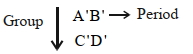
Consider the following elements.

Which of the following is/are true about $\mathrm{A}^{\prime}, \mathrm{B}^{\prime}, \mathrm{C}^{\prime}$ and $\mathrm{D}^{\prime}$ ?

$A$. Order of atomic radii: $\mathrm{B}^{\prime}<\mathrm{A}^{\prime}<\mathrm{D}^{\prime}<\mathrm{C}^{\prime}$

$B$. Order of metallic character: $\mathrm{B}^{\prime}<\mathrm{A}^{\prime}<\mathrm{D}^{\prime}<\mathrm{C}^{\prime}$

$C$. Size of the element : $\mathrm{D}^{\prime}<\mathrm{C}^{\prime}<\mathrm{B}^{\prime}<\mathrm{A}^{\prime}$

$D$. Order of ionic radii : $\mathrm{B}^{\prime+}<\mathrm{A}^{\prime+}<\mathrm{D}^{\prime+}<\mathrm{C}^{\prime+}$

Choose the correct answer from the options given below :
Which of the following statements about $Fe(CO)_5$ is correct ?
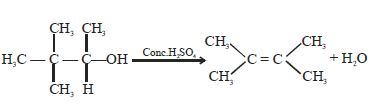
In following reaction Which type of reaction intermediate is likely to involve
Which of the following complex is optically inactive
What is $\mathrm{A}$ in the following reaction?
Which one of the following will undergo meta substitution on monochlorination
Which of the following compounds will show geometrical isomerism ?