Question
On which basis, materials can be divided?

Answer

Materials can be divided as metals and non$-$metals. Metals can be separated on the basis of physical and chemical properties.
Physical properties:
Ductility, Malleability, Lustre and Hardness are physical properties.
Chemical properties:
$i.$ Metals on reaction with oxygen form basic oxides while non$-$metals on reaction with oxygen form acidic oxides.
$ii.$ Metals react with water but non$-$metals do not react with water.
$iii.$ Metals react with acids and produce hydrogen gas but non$-$metals do not react with acids.
$iv.$ Metals react with bases and produce hydrogen gas but reactions of non$-$metals with bases are complex.

Need a full question paper?

Generate a complete, print-ready paper with questions like this in minutes — across 16+ boards, with answer keys.

Start Generating Free

Similar questions

Draw a diagram of the human eye.
Some properties are listed in the following Table. Distinguish between metals and non-metals on the basis of these properties.
 
Properties
Metals
Non-metals
$1$
Appearance
   
$2$
Hardness
   
$3$
Malleability
   
$4$
Ductility
   
$5$
Heat Conduction
   
$6$
Conduction of Electricity
   
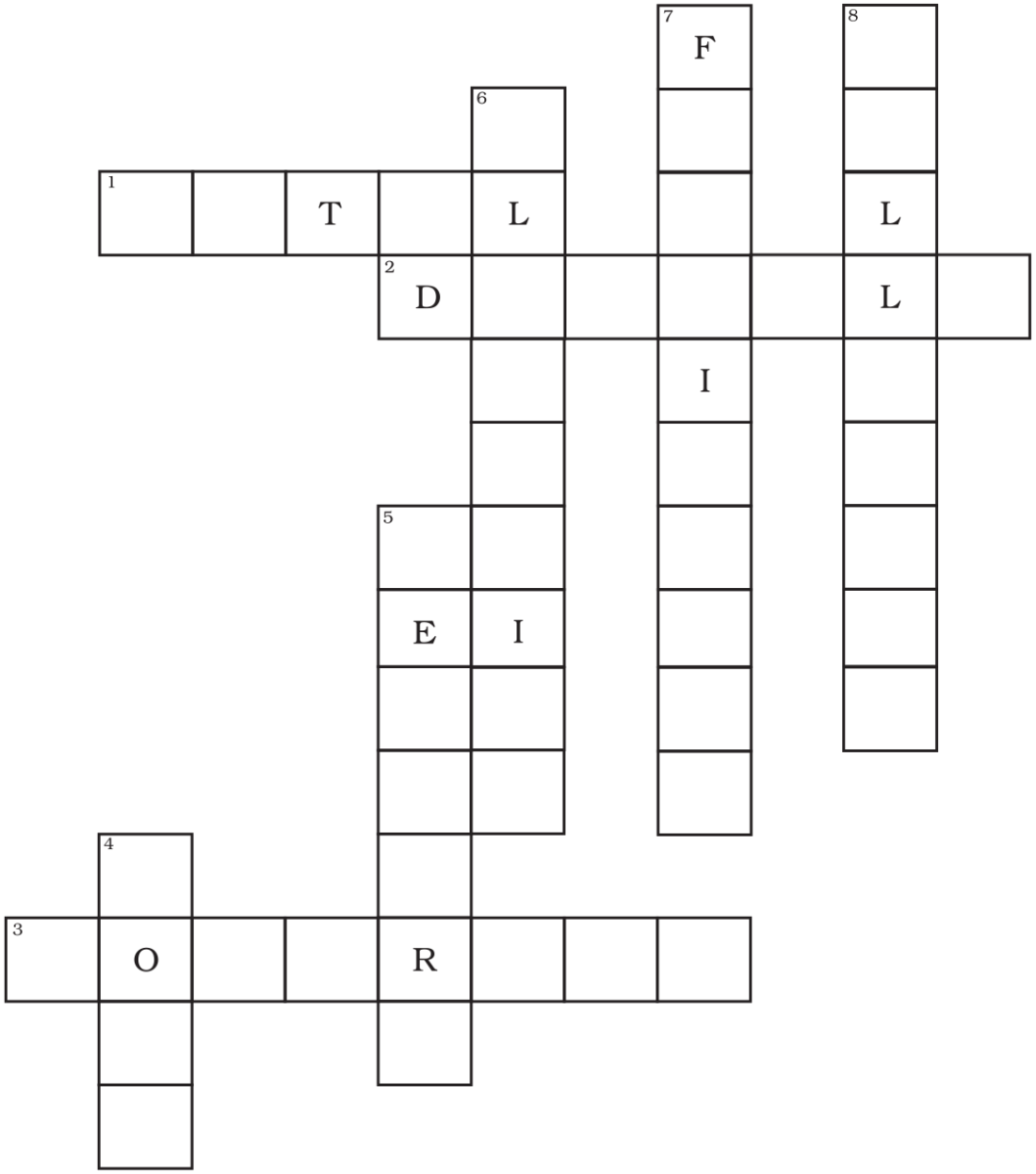
Complete the crossword given in Fig. with the help of the clues. Across:
$1.$ Which is generally hard, ductile, malleable and sonorous.
$2.$ A metal is called so it can be drawn into wires.
$3.$ Metal bells are used because of this property.
Down:
$4.$ A metal generally used for making jewellery.
$5.$ A metal which is liquid at room temperature.
$6.$ A metal which reacts with acid as well as base to form hydrogen gas.
$7.$ Substances used to enhance the growth of plants.
$8.$ Property by virtue of which metals can be beaten into thin sheets.

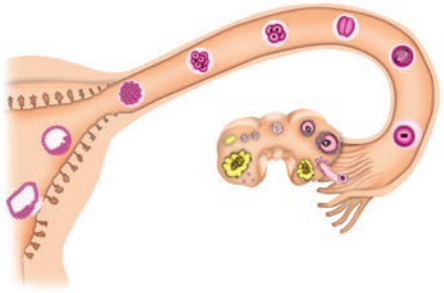
After observing Fig. answer the following.
$a.$ Read the following statements and label them in the figure:
$i.$ The part which produces female gametes.
$ii.$ The part where development of the baby takes place.
$iii.$ The part through which the developing embryo passes to reach the uterus.
$b.$ Explain the future development of the embryo that would take place after it gets embedded in the uterus.
With the help of a labelled diagram, describe briefly how an iron key can be electroplated with copper.
A man stands 10m in front of a large plane mirror. How far must he walk before he is $5m$ away from his image?
What is global warming? What are the likely harmful effects of global warming?
Explain how Earth’s position, atmosphere, and magnetic field make it uniquely suitable for life.
State five uses of metals and five uses of non$-$metals.
What are the functions of the following parts of the eye?
$i.$ Iris.
$ii.$ Eye$-$lens.
$iii.$ Ciliary muscles.
$iv.$ Retina.
$v.$ Optic nerve.