MCQ
One a.m.u is defined as mass of:
  • A
    $\frac{1}{16}$th mass of one oxygen atom
  • B
    $\frac{1}{14}$​th mass of one atom of nitrogen
  • C
    $\frac{1}{12}$th mass of one carbon-12 atom
  • D
    None of above

Answer

  1. $\frac{1}{12}$th mass of one carbon-12 atom

Explanation:

One a.m.u. is defined as mass of $\frac{1}{12}$th the mass of one carbon-12 atom.

Need a full question paper?

Generate a complete, print-ready paper with questions like this in minutes — across 16+ boards, with answer keys.

Start Generating Free

Similar questions

To get the maximum current from a parallel combination of n identical cells each of internal resistance r in an external resistance R, when

(a) R >> r

(b) R << r

(c) R = r

(d) None of these

The sum of all electromagnetic forces between different particles of a system of charged particles is zero:
  1. Only if all the particles are positively charged.
  2. Only if all the particles are negatively charged.
  3. Only if half the particles are positively charged and half are negatively charged.
  4. Irrespective of the signs of the charges.
When the length of a microscope tube is increased, its magnifying power :

Flint glass prism is joined by a crown glass prism to produce dispersion without deviation. The refractive indices of these for mean rays are 1.602 and 1.500 respectively. Angle of prism of flint prism is 10°, then the angle of prism for crown prism will be

(a) 12°2.4'

(b) 12°4’

(c) 1.24°  

(d) 12°

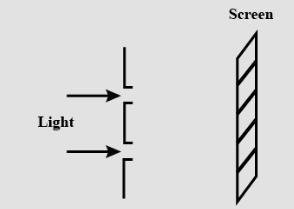
A white light is passed through the two narrow slits and produced a pattern of alternating bright and dark lines on the screen as shown above. What will effects on the central bright band , if the distance between screen and slits are increased?

Electric charges of +10μC, + 5μC, -3μC and +8 μC  are placed at the corners of a square of side  m. the potential at the centre of the square is

(a) 1.8 V 

(b)  V

(c) 1.8  

(d) 1.8  V

The value of excitation energy required to bring an electron to the first excited state in hydrogen atom is :
An equipotential surface is that surface:
Let Fpp' Fpn and Fnn fill denote the magnitudes of the nuclear force by a proton on a proton, by a proton on a neutron and by a neutron on a neutron respectively. When the separation is 1fm:
At breakdown voltage, the rate of creation of hole-electron pairs is _____ leading to the _______ in current.