MCQ
One coulomb charge is equivalent to the charge contained in:
  • A
    2.6 × 10¹⁹ electrons.
  • B
    6.2 × 10¹⁹ electrons.
  • C
    2.65 × 10¹⁸ electrons.
  • D
    6.25 × 10¹⁸ electrons.

Answer

  1. 6.25 × 10¹⁸ electrons.

Explanation:

The coulomb is the SI unit of electric charge. It is the charge transported by a constant current of one ampere in one second. It is equivalent to the charge of approximately 6.25 × 10¹⁸ protons or electrons.

Need a full question paper?

Generate a complete, print-ready paper with questions like this in minutes — across 16+ boards, with answer keys.
Start Generating Free

Similar questions

The least distance of distinct vision for a normal eye is:
Which of the following controls the amount of light entering the eye?
  1. Ciliary muscles.
  2. Lens.
  3. Iris.
  4. Cornea.
In a filament type light bulb, most of the electric power consumed appears as:
  1. Visible light.
  2. Infra-red-rays.
  3. Ultraviolet rays.
  4. Fluorescent light.
Each one of the following changes will increase emf (or voltage) in a simple generator except:
  1. Increasing the number of turns in the armature coil.
  2. Winding the coil on a soft iron armature.
  3. Increasing the size of the gap in which the armature turns.
  4. Increasing the speed of rotation.
A car headlamp of 48W works on the car battery of 12V. The correct fuse for the circuit of this car headlamp will be:
  1. 5A
  2. 10A
  3. 3A
  4. 13A
Consider two statements A and B given below:
  1. Real image is always inverted.
  2. Virtual image is always erect.
Out of these two statements:
The magnetic field inside a long straight solenoid carrying current:
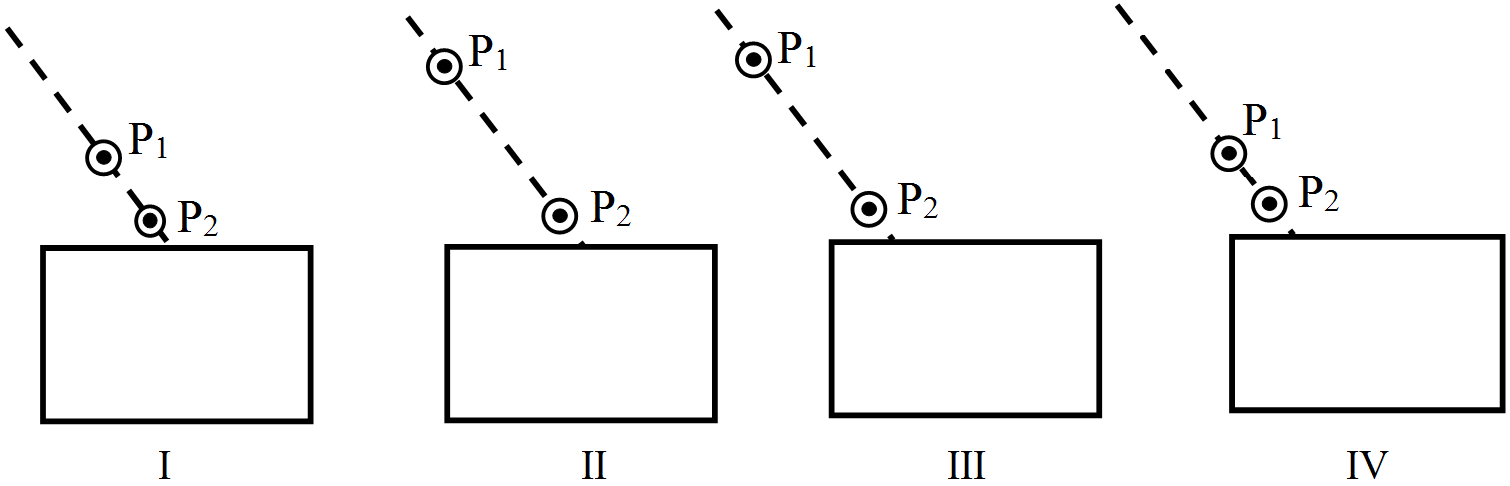
While performing the experiment on tracing the path of a ray of light through a rectangular glass slab, in which of the following experimental set-ups is a student likely to get best results? P1 and Pare the positions of pins fixed by him.
The magnification produced by a spherical mirror and a spherical lens is +0.8.
  1. The mirror and lens are both convex.
  2. The mirror and lens are both concave.
  3. The mirror is concave but the lens is convex.
  4. The mirror is convex but the lens is concave.
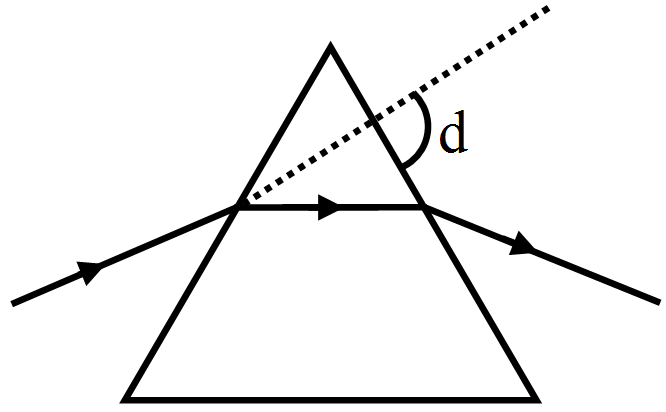
Light rays are deviated by a prism.

The deviation angle d is measured for light rays of different frequency including blue light and red light. Which graph is correct?