Question
One day, Ramesh’s friend was performing their respective experiments given by their teacher. While sitting in the practical lab instead of performing experiment, Ramesh was playing with his meter scale. All the sudden, he held the scale in his hand and started moving in front of tubelight, then he observed the seven colours of white light. After sometimes, he got scolded by his lab teacher for not performing the experiment.
  1. Give the name of phenomenon that leads to the formation of band of seven colours.
  2. Name the constituent colours of white light.
  3. Mention the values shown by Ramesh here.
Answer

  1. Dispersion of white light is the name of phenomenon which leads to the formation of band of seven colours.
  2. There are seven constituent colours of white light, they are Violet, Indigo, Blue, Green, Yellow, Orange, Red $($i.e. $VIBGYOR).$
  3. Ramesh seems to be quite innovative with respect to the scientific methods and also very eager to learn science regarding phenomena.

Need a full question paper?

Generate a complete, print-ready paper with questions like this in minutes — across 16+ boards, with answer keys.

Start Generating Free

Similar questions

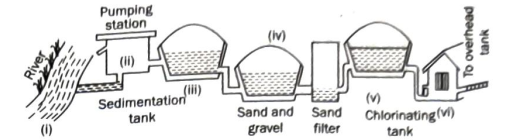
Observe the given figure and answer the following
(a) What does this figure show?
(b) State the functions of each part of the figure.
Image
Why is mercury used as an indicator in a thermometer?
Why is it necessary to excrete waste products?
Three students start running from the starting point at the same time. The picture shows the position of the students on the path after a minute.
Image
Which student ran the fastest? Explain your answer.
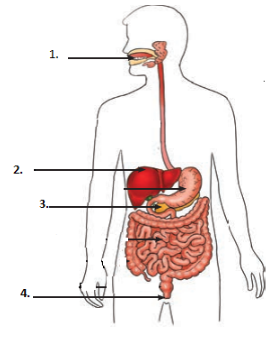
Refer to the diagram of the human digestive system and answer the following Question:
(a) Label the parts marked as 1, 2, 3 and 4.
(b) Name the longest part of alimentary canal.
Image
A small amount of hydrochloric acid is always produced in the stomach. Is it useful or harmful for us? If excess of acid is produced in the stomach, what should we do?

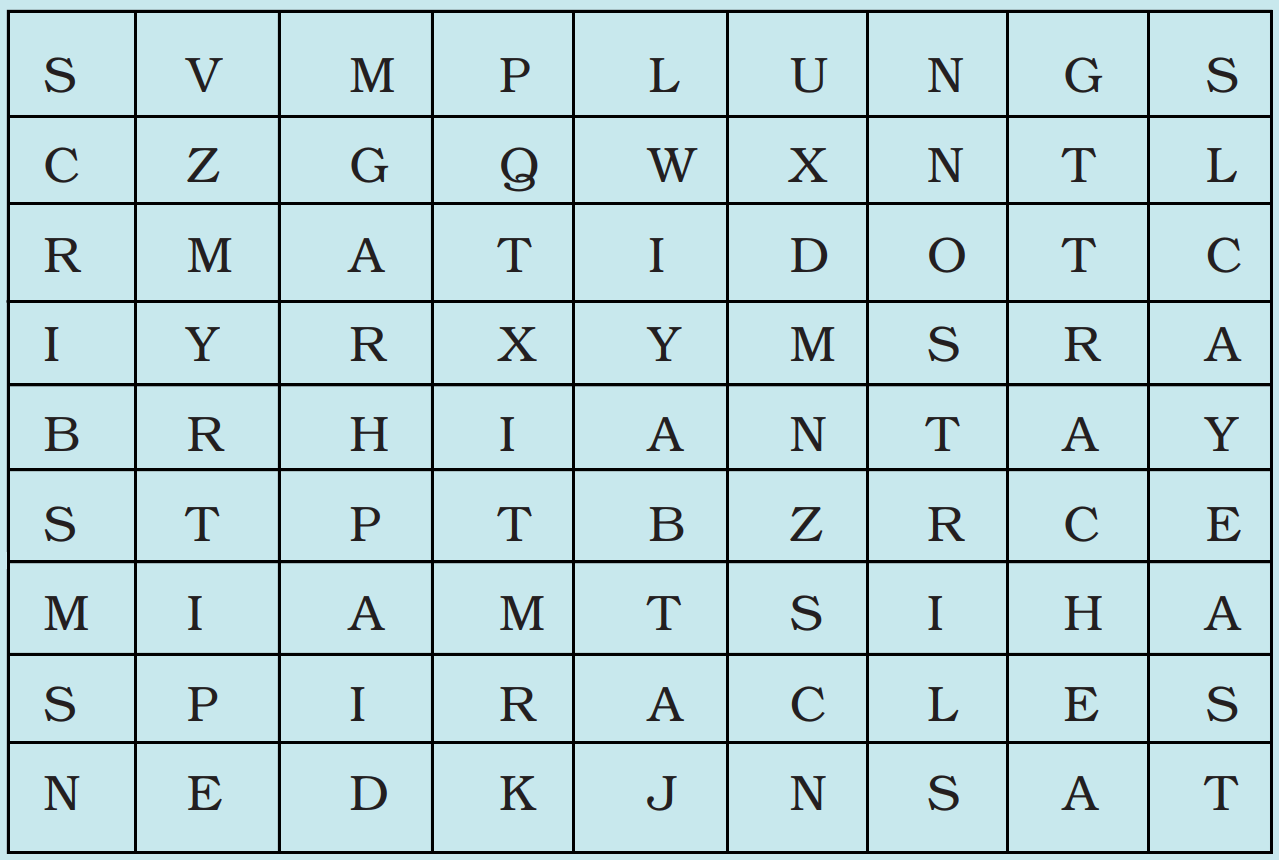
Given below is a square of letters in which are hidden different words related to respiration in organisms. These words may be present in any direction-upwards, downwards, or along the diagonals. Find the words for your respiratory system. Clues about those words are given below the square.

  1. The air tubes of insects.
  2. Skeletal structures surrounding chest cavity.
  3. Muscular floor of chest cavity.
  4. Tiny pores on the surface of leaf.
  5. Small openings on the sides of the body of an insect.
  6. The respiratory organs of human beings.
  7. The openings through which we inhale.
  8. An anaerobic organism.
  9. An organism with tracheal system.
Read the passage and answer the questions :
You are conducting an experiment where you add vinegar to baking soda. As soon as the two substances mix, there is a fizzing sound, and bubbles of gas begin to form, pass this gas through freshly prepared lime water. You observe that the lime water has turned milky due to formation of a precipitate.
Q.1. What type of change has occurred in this experiment?
(a) Physical change
(b) Chemical change
(c) Both physical and chemical change
(d) No change
Q.2. What is the gas that has been produced in this reaction?
(a) Oxygen$\quad$(b) Nitrogen
(c) Carbon dioxide$\quad$(d) Hydrogen
Q.3. What is the name of the white precipitate that forms in the solution?
(a) Calcium hydroxide
(b) Calcium carbonate
(c) Sodium bicarbonate
(d) Magnesium oxide
Why is it called an artery if it does not carry oxygen-rich blood?
Blue litmus paper is dipped in a solution. It remains blue. What is the nature of the solution? Explain.