MCQ
One nanometre is equal to
  • A
    $10^9 mm$
  • B
    $10^{-6} cm$
  • $10^{-7} cm$
  • D
    $10^{-9} cm$

Answer

Correct option: C.
$10^{-7} cm$
(c) $1 \mathrm{~nm}=10^{-9} \mathrm{~m}=10^{-7} \mathrm{~cm}$

Need a full question paper?

Generate a complete, print-ready paper with questions like this in minutes — across 16+ boards, with answer keys.
Start Generating Free

Similar questions

An expression for rate of heat generated, if a current of $I$ ampere flows through a resistance of $R \Omega$, is
Kinetic energy with which the electrons are emitted from the metal surface due to photoelectric effect is
A metal rod moves at a constant velocity in a direction perpendicular to its length. A constant uniform magnetic field exists in space in a direction perpendicular to the rod as well as its velocity. Select the correct statement(s) from the following
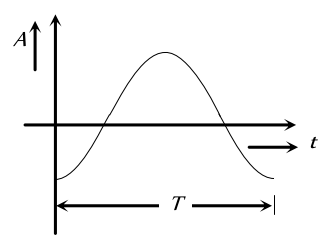
Acceleration $A$ and time period $T$ of a body in S.H.M. is given by a curve shown below. Then corresponding graph, between kinetic energy (K.E.) and time $t$ is correctly represented by
Image
A man throws a ball vertically upward and it rises through $20 m$ and returns to his hands. What was the initial velocity ( $u$ ) of the ball and for how much time $(T)$ it remained in the air $\left[g=10 m / s^2\right]$
There is a current of $1.344 \mathrm{amp}$ in a copper wire whose area of cross-section normal to the length of the wire is $1 \mathrm{~mm}^2$. If the number of free electrons per $\mathrm{cm}^3$ is $8.4 \times 10^{22}$, then the drift velocity would be
$K_\alpha$ wavelength emitted by an atom of atomic number $Z=11$ is $\lambda$. Find the atomic number for an atom that emits $K_\alpha$ radiation with wavelength $4 \lambda$
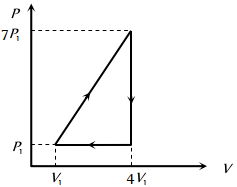
In the cyclic process shown in the figure, the work done by the gas in one cycle is
Image
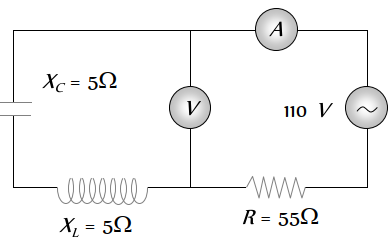
The reading of ammeter in the circuit shown will be
Image
On a rough horizontal surface, a body of mass $2 \mathrm{~kg}$ is given a velocity of $10 \mathrm{~m} / \mathrm{s}$. If the coefficient of friction is 0.2 and $g=10 \mathrm{~m} / \mathrm{s}^2$, the body will stop after covering a distance of