Question
Operating Cycle and the period when payment is made is given below. How will you classify the liability?
Particulars
(i)
(ii)
(iii)
(iv)
(v)
(vi)
Operating Cycle (Months)
9
11
11
18
18
10
Expected Period when payment is made (Months)
12
12
13
20
16
12

Answer

While Classifying the liabilities into Current and Non Current following two points should be taken into consideration:
  1. All liabilities, of which the payment is expected to be made within 12 months from the date of Balance sheet shall be treated as Current. Period of cycle is irrelevant in such cases.
Hence, liabilities in case of (i), (ii) and (vi) shall be treated as Current Liabillities.
  1. Liabilities, of which the payment is expected to be made beyond 12 months from the date of Balance sheet:
  1. If payment period is less than the period of operating cycle, the liabilities shall be treated as current liability.
Hence, liabilities in case of (v) shall be treated as current Liabilities.
  1. If If payment period is more than the period of operating cycle, he liabilities shall be treated as non current liability.
Hence, liabilities in case of (iii) and (iv) shall be treated as non current Liabilities.

Need a full question paper?

Generate a complete, print-ready paper with questions like this in minutes — across 16+ boards, with answer keys.

Start Generating Free

Similar questions

Quick Assets ₹ 1,50,000; Inventory (Stock) ₹ 40,000; Prepaid Expenses ₹ 10,000; Working Capital ₹ 1,20,000. Calculate Current Ratio.
Hints:
  1. Current Assets = Quick Assets + Inventory + Prepaid Expenses.
  2. Current Liabilities = Current Assets - Working Capital.
Total Debt ₹ 15,00,000; Current Liabilities ₹ 5,00,000; Capital Employed ₹ 15,00,000. Calculate Total Assets to Debt Ratio.
From the following information, calculate Inventory Turnover Ratio:
Revenue from Operations (Sales) ₹ 4,00,000, Average Inventory: ₹ 55,000. The rate of Gross Loss on Revenue from Operations was 10%.
Identify which of the following items will be shown in the Notes to Accounts on 'Other Expenses':
  1. Consumption of Loose Tools.
  2. Staff Welfare Expenses.
  3. Wages.
  4. Courier Expenses.
  5. Carriage Outwards.
  6. Discount Allowed.
  7. Bank Charges.
  8. Rent for warehouse.
  9. Depreciation on Machinery.
  10. Gratuity paid.
  11. Goodwill written off.
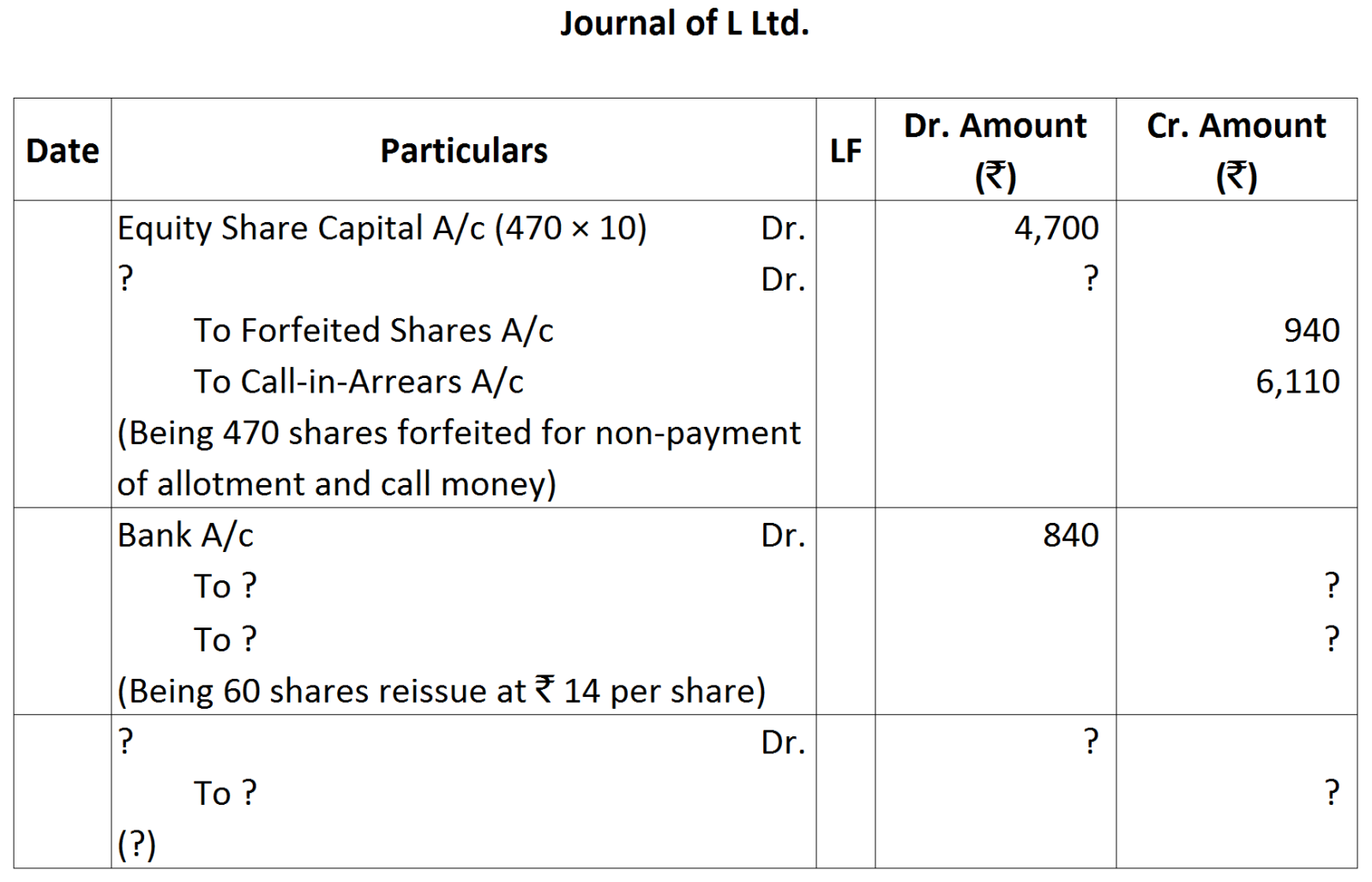
(Forfeiture and Reissue of shares). Complete the following Journal entries:
X Ltd. took over the following assets and liabilities of Y Ltd:
Land & Building ₹ 20,00,000; Stock ₹ 5,00,000; Sundry Debtors ₹ 2,50,000 and Sundry Creditors ₹ 2,00,000.
X Ltd. paid purchase consideration by issuing Bank Draft of ₹ 16,00,000 and 50,000 Equity Shares of ₹ 20 each at 10% premium. Calculate purchase consideration and pass journal entries in the books of X Ltd.
Rajan Ltd. purchased assets from Geeta & Co. for ₹ 5,00,000. A sum of ₹ 1,00,000 was paid by means of a bank draft and for the balance due Rajan Ltd. issued equity Shares of ₹ 10 each at a premium of 25%. journalise the above transactions in the books of the company.
Mr. Arun Birla owns a business and gives the following figures for two successive years:
 
1st Year
2nd Year
 
Revenue from Operations
60,000
1,20,00
Gross Profit
15,000
24,000
Mr. Arun Birla speaks very high of his Manager who has increased the profits from ₹ 15,000 to ₹ 24,000 and describes him very 'Efficient'. Do you agree with him? If not, why?
Comparison with the help of ratios is not possible if different firms follow different accounting policies.'' Comment.
List the major headings on the asset side of the Balance Sheet of a company as per schedule VI Part I of the Companies Act 1956.