MCQ
Oxidation number of $P$ in $K{H_2}P{O_2}$ is
  • $+1$
  • B
    $+3$
  • C
    $+5$
  • D
    $-4$

Answer

Correct option: A.
$+1$
(a) In $\mathop {K{H_2}P{O_2}}\limits^{\,\,\,\,\, * } $

$1 + 2 + x + ( - 2 \times 2) = 0$

$3 + x - 4 = 0$; $x = + 1$.

Need a full question paper?

Generate a complete, print-ready paper with questions like this in minutes — across 16+ boards, with answer keys.

Start Generating Free

Similar questions

The enthalpy of neutralization of a strong acid by a strong base is $-57.32\ kJ/mol$ the enthalpy of formation of water is $-285.84\ kJ/mol$ . The enthalpy of formation of hydroxyl ion is......$kJ/mol$
Which of the following is not tetrahedral
Consider the electronic configuration for neutral atoms:

$(i)$ $1s^22s^2p^63s^1$            $(ii)$ $1s^22s^22p^64s^1$

Which of the following statements is/are false ?

$(a)$ Energy is required to change $(i)$ to $(ii)$

$(b)$ $(i)$ represents $‘Na’$ atom

$(c)$ $(i)$ and $(ii)$ represent different elements

$(d)$ More energy is required to remove one electron from $(i)$ than $(ii)$
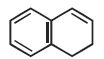
Which of the following statement is wrong for the given molecule
Aluminium hydroxide is soluble in excess of sodium hydroxide forming the ion
When $E_{A{g^ + }/Ag}^o = 0.8$volt and $E_{Z{n^{2 + }}/Zn}^o = - 0.76\,$ volt, which of the following is correct
Which of the following has highest knocking property
$\begin{array}{*{20}{c}}
  {\begin{array}{*{20}{c}}
  {O\,\,\,\,\,\,\,\,\,\,\,\,\,\,\,\,\,\,\,\,\,\,\,} \\ 
  {||\,\,\,\,\,\,\,\,\,\,\,\,\,\,\,\,\,\,\,\,\,\,\,\,} 
\end{array}} \\ 
  {N{H_2} - CH - C - NH - C{H_2} - C{O_2}H} \\ 
  {|\,\,\,\,\,\,\,\,\,\,\,\,\,\,\,\,\,\,\,\,\,\,\,\,\,\,\,\,\,\,\,\,\,\,\,\,\,\,\,\,\,\,\,\,\,\,\,\,\,\,\,} \\ 
  {C{H_3}\,\,\,\,\,\,\,\,\,\,\,\,\,\,\,\,\,\,\,\,\,\,\,\,\,\,\,\,\,\,\,\,\,\,\,\,\,\,\,\,\,\,\,\,\,} 
\end{array}$

Identify the amino acid obtianed by hydrolysis of the above compound

In the given reaction $3-$Bromo$-2,2-$dimethyl butane

${\mathrm{C}_{2} \mathrm{H}_{5} \mathrm{OH}}{\longrightarrow} {\text { (Major product) }{ }^{\prime} \mathrm{A}^{\prime}}$

Product $A$ is :

For the equilibrium $A \rightleftharpoons$ $B$ , the variation of the rate of the forward $(a)$ and reverse $(b)$ reaction with time is given by