MCQ
Ozone layer protects us from which harmful radiations coming from the sun?
- AX-rays
- BGamma rays
- ✓Ultra-violet rays
- DMicro waves
Generate a complete, print-ready paper with questions like this in minutes — across 16+ boards, with answer keys.
The half-life of  is 100μs. The time taken for the radioactivity of a sample of to decay to 1/16th of its initial value is
|
(a) 400 μs |
(b) 6.3 μs |
(c) 40 μs |
(d) 300 μs |
A charged particle moves in a uniform magnetic field. The velocity of the particle at some instant makes an acute angle with the magnetic field. The path of the particle will be
|
(a) A straight line |
(b) A circle |
|
(c) A helix with uniform pitch |
(d) A helix with non-uniform pitch |
The oscillating electric and magnetic vectors of an electromagnetic wave are oriented along
|
(a) The same direction but differ in phase by 90° |
|
(b) The same direction and are in phase |
|
(c) Mutually perpendicular directions and are in phase |
|
(d) Mutually perpendicular directions and differ in phase by 90° |
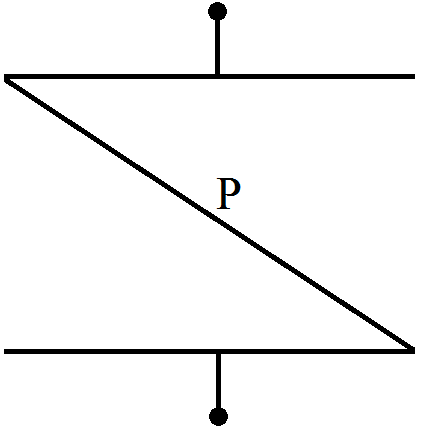
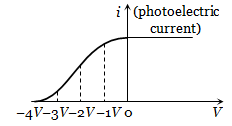
The value of stopping potential in the following diagram
|
(a) – 4V |
(b) – 3 V |
(c) – 2V |
(d) – 1 V |
A cell of e.m.f 1.5 V having a finite internal resistance is connected to a load resistance of 2Ω. For maximum power transfer the internal resistance of the cell should be
|
(a) 4 ohm |
(b) 0.5 ohm |
(c) 2 ohm |
(d) None of these |
In  solution when electric current equal to 2.5 faraday is passed, the gm equivalent deposited on the cathode is
|
(a) 1 |
(b) 1.5 |
(c) 2 |
(d) 2.5 |