MCQ
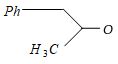
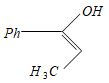
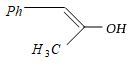
$Ph - C \equiv C - C{H_3}\xrightarrow{{H{g^{2 + }}/{H^ + }}}A$. $A$ is

  • B

  • C

  • D

Answer

Correct option: A.

a
(a) ${C_6}{H_5} - C \equiv C - C{H_3}\mathop {\xrightarrow{{HgS{O_4}}}}\limits_{{H_2}S{O_4}} {C_6}{H_5}\mathop {\mathop { - C - }\limits^{||} }\limits^O C{H_2} - C{H_3}$

Need a full question paper?

Generate a complete, print-ready paper with questions like this in minutes — across 16+ boards, with answer keys.
Start Generating Free

Similar questions

According to dalton’s atomic theory, an atom
Bond angle between two hybrid orbitals is ${105^o}.\% $ $s-$orbital character of hybrid orbital is
The $IUPAC$ name for $C{H_3}CHOHC{H_2} - \mathop {\mathop {\mathop {\mathop {C - }\limits^{|\,\,\,\,\,} }\limits^{C{H_3}} }\limits_{|\,\,\,\,} }\limits_{C{H_3}} OH$ is
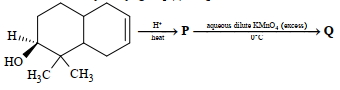
The number of hydroxyl group$(s)$ in $Q$ is
The Born-Haber cycle for $\mathrm{KCl}$ is evaluated with the following data :

$\Delta_{f} \mathrm{H}^{\ominus}$ for $\mathrm{KCl}=-436.7 \,\mathrm{~kJ}\, \mathrm{~mol}^{-1}$

$\Delta_{\text {sub }} \mathrm{H}^{\ominus}$ for $\mathrm{K}=89.2 \,\mathrm{~kJ}\, \mathrm{~mol}^{-1}$

$\Delta_{\text {ionization }} \,\mathrm{H}^{-}$ for $\mathrm{K}=419.0\, \mathrm{~kJ}\, \mathrm{~mol}^{-1}$

$\Delta_{\text {electron gain }} \mathrm{H}^{\ominus}$ for $\mathrm{Cl}_{(\text {e) }}=-348.6 \,\mathrm{~kJ} \,\mathrm{~mol}^{-1}$

$\Delta_{\mathrm{bond}} \mathrm{H}^{-}$ for $\mathrm{Cl}_{2}=243.0 \,\mathrm{~kJ} \,\mathrm{~mol}^{-1}$

The magnitude of lattice enthalpy of $\mathrm{KCl}$ in $\mathrm{kJ} \mathrm{mol}^{-1}$ is ..... . (Nearest integer)

Calculate $[H^+]$ at equivalent point between titration of $0.1\,M,\,25\,ml$ of weak acid $HA$ $(K_a = 10^{-5})$ with $0.05\,M\,NaOH$ solution.
At the sea level, the dry air mass percentage composition is given as nitrogen gas : 70.0, oxygen gas : 27.0 and argon gas : 3.0. If total pressure is 1.15 atm, then calculate the ratio of followings respectively :
(i) partial pressure of nitrogen gas to partial pressure of oxygen gas
(ii) partial pressure of oxygen gas to partial pressure of argon gas
(Given : Molar mass of N, O and Ar are $14, 16,$ and $40 \mathrm{~g} \mathrm{~mol}^{-1}$ respectively)
Which contains both polar and non-polar covalent bonds
If sodium sulphate is considered to be completely dissociated into cations and anions in aqueous solution, the change in freezing point of water $(\Delta T_f),$ when $0.01 \,mol$ of sodium sulphate is dissolved in $1\, kg$ of water, is $(K_f= 1.86\,K\,kg\, mol^{-1})$
Which one of the following species does not exist under normal conditions ?