MCQ
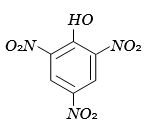
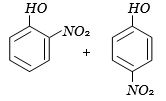
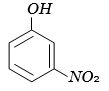
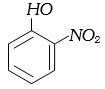
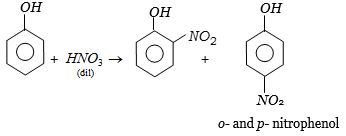
Phenol reacts with dilute $HN{O_3}$ at normal temperature to form
  • A


  • C

  • D

Answer

Correct option: B.

b
(b)

Need a full question paper?

Generate a complete, print-ready paper with questions like this in minutes — across 16+ boards, with answer keys.

Start Generating Free

Similar questions

Which among the following reaction not possible?
The electric charge for electrode deposition of $1g$ equivalent of a substance is:
$20 \%$ of acetic acid is dissociated when its $5\,g$ is added to $500\,mL$ of water. The depression in freezing point of such water is $.....\times 10^{-3} \;{ }^{\circ} C$. Atomic mass of $C , H$ and $O$ are $12,1$ and $16\,a.m.u.$ respectively.

[Given : Molal depression constant and density of water are $1.86\, K\, kg\, mol^{-1}$ and $1\, g\, cm^{-3}$ respectively.]

Which one of the following ores is best concentrated by froth$-$floatation method?
In the following sequence of reactions $C{H_3}C{H_2}OH\,\xrightarrow{{P + {I_2}}}A\xrightarrow[{Ether}]{{Mg}}B\xrightarrow{{HCHO}}C\xrightarrow{{{H_2}O}}D,$ then compound $'D'$ is
If the adsorbate is held on the surface of an adsorbent by force of van der Waals type, the adsorption is called:
Calculate emf of cell at $25^{\circ} C$

Cell notation : $M \left|\underset{0.01}{ M ^{2+}} \| \underset{0.0001}{ M ^{2+}}\right| M$

.........$V$ value of $E _{ Cell }^{o}$ is $4$ volt (Given $\frac{ RT }{ F }$ in $10=0.06$ )

Identify the products in the following reaction sequence :
$\text { 3,4,5-tribromoaniline } \xrightarrow[\text { (ii) } H_3 PO_2]{\text { (i) Dizotization }}$
The magnetic nature of elements depends on the presence of unpaired electrons. Identify the configuration of transition elements which shows highest magnetic moment?
Consider the following standard electrode potentials ($E^o$ in volts) in aqueous solution

Element $M^{3+}/ M$ $M^+/M$
$Al$ $-1.66$ $+0.55$
$Tl$ $+1.26$ $-0.34$

Based on these data, which of the following statements is correct ?