MCQ
Photoelectric effect shows:
- AWave like behaviour of light.
- BParitcle like behaviour of light.
- CBoth wavelike and paticle like behaviour.
- DNeither wave like nor particle like behaviour of light.
Generate a complete, print-ready paper with questions like this in minutes — across 16+ boards, with answer keys.
The resistance of a coil is 4.2 Ω at 100 oC and the temperature coefficient of resistance of its material is 0.004/o C. Its resistance at 0o C is
| (a) 6.5 Ω | (b) 5 Ω |
(c) 3 Ω |
(d) 4 Ω |
When  electrons are removed from a neutral metal sphere, the charge on the sphere becomes
|
(a) 16 μC |
(b) -16 μC |
(c) 32 μC |
(d) -32 μC |
According to Einstein's photoelectric equation, the graph between the kinetic energy of photoelectrons ejected and the frequency of incident radiation is
(a)
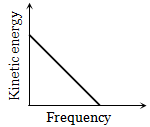
|
(b)
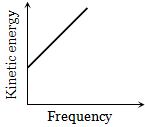
|
(c)
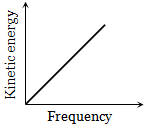
|
(d)
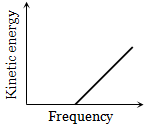
|
The correct relation is (Where  Horizontal component of earth's magnetic field;
  = Vertical component of earth's magnetic field and B = Total intensity of earth's magnetic field)
(a) B = 
|
(b) 
|
(c) |B| = 
|
(d) 
|