Planck's constant $h$, speed of light $c$ and gravitational constant $G$ are used to form a unit of length $L$ and a unit of mass $M$. Then the correct option$(s)$ is(are)
$(A)$ $M \propto \sqrt{ c }$ $(B)$ $M \propto \sqrt{ G }$ $(C)$ $L \propto \sqrt{ h }$ $(D)$ $L \propto \sqrt{G}$
IIT 2015, Diffcult


Download our appand get started for free
Experience the future of education. Simply download our apps or reach out to us for more information. Let's shape the future of learning together!No signup needed.*
Similar Questions
- 1The equation of a wave is given by$Y = A\sin \omega \left( {\frac{x}{v} - k} \right)$where $\omega $ is the angular velocity and $v$ is the linear velocity. The dimension of $k$ isView Solution
- 2Given that $v$ is the speed, $r$ is radius and $g$ is acceleration due to gravity. Which of the following is dimensionless?View Solution
- 3The speed of a wave produced in water is given by $v=\lambda^a g^b \rho^c$. Where $\lambda$, g and $\rho$ are wavelength of wave, acceleration due to gravity and density of water respectively. The values of $a , b$ and $c$ respectively, areView Solution
- 4View SolutionThe unit of power is
- 5A screw gauge has some zero error but its value is unknown. We have two identical rods. When the first rod is inserted in the screw, the state of the instrument is shown by diagram $(I).$ When both the rods are inserted together in series then the state is shown by the diagram $(II).$ What is the zero error of the instrument ? .......... $mm$View Solution
$1\,M.S.D. = 100\, C.S.D. = 1\, mm $
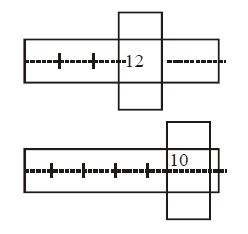
- 6If $w, x, y$ and $z$ are mass, length, time and current respectively, then $\frac{x^2w}{y^3z}$ has dimensional formula same asView Solution
- 7A Vernier calipers has $1 \mathrm{~mm}$ marks on the main scale. It has $20$ equal divisions on the Vernier scale which match with $16$ main scale divisions. For this Vernier calipers, the least count isView Solution
- 8In $SI $ units the dimensions of $\sqrt {\frac{{{ \varepsilon _0}}}{{{\mu _0}}}} $ isView Solution
- 9Quantity $Z$ varies with $x$ and $y$ , according to given equation $Z = x^2y - xy^2$ , where $x = 3.0 \pm 0.1$ and $y = 2.0 \pm 0.1$ . The value of $Z$ isView Solution
- 10$1$ joule of energy is to be converted into new system of units in which length is measured in $10$ metre, mass in $10 \,kg$ and time in $1$ minute. The numerical value of $1 \,J$ in the new system isView Solution