MCQ
Ploughing help to retain water by soil ...........
  • A
    By creating capillaries
  • By breaking capillaries
  • C
    By turning the soil upside down
  • D
    None of these

Answer

Correct option: B.
By breaking capillaries
b
(b)

By breaking capillaries as they do not allow water to seep inside.

Need a full question paper?

Generate a complete, print-ready paper with questions like this in minutes — across 16+ boards, with answer keys.
Start Generating Free

Similar questions

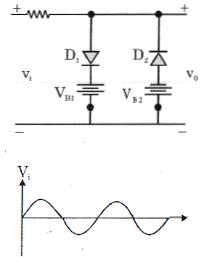
Consider the following circuit the waveform given in input is If ${V_{{B_1}}}$ , and ${V_{{B_2}}}$  , are less than peak value of input than output will look like
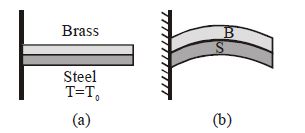
In figure which strip brass or steel have higher coefficient of linear expansion
The diameter of objective of a telescope is $1m.$ Its resolving limit for the light of wave length $4538 Å,$ will be
A spring balance is graduated on sea level. If a body is weighed with this balance at consecutively increasing heights from earth's surface, the weight indicated by the balance
What will be the colour of sky as seen from the earth, if there were no atmosphere
 A narrow tube is bent in the form of a circle of radius $R,$ as shown in the figure. Two small holes $S$ and $D$ are made in the tube at the positions right angle to each other. A source placed at $S$ generated a wave of intensity $I_0$ which is equally divided into two parts : One part travels along the longer path, while the other travels along the shorter path. Both the part waves meet at the point $D$ where a detector is placed If a maxima is formed at the detector then, the magnitude of wavelength $\lambda$ of the wave produced is given by $\pi R$
Which statement is correct for a zone plate and a lens
A hoop of radius $r$ and mass $m$ rotating with an angular velocity $\omega_0$ is placed on a rough horizontal surface. The initial velocity of the centre of the hoop is zero. What will be the velocity of the centre of the hoop when it ceases to slip?
Two trains travelling on the same track are approaching each other with equal speeds of $40\, m/s$. The drivers of the trains begin to decelerate simultaneously when they are just $2.0\, km$ apart. Assuming the decelerations to be uniform and equal, the value of the deceleration to barely avoid collision should be.........$m/{s^2}$
The $\beta$-decay process, discovered around $1900$ , is basically the decay of a neutron ( $n$ ), In the laboratory, a proton ( $p$ ) and an electron ( $e ^{-}$) are observed as the decay products of the neutron. therefore, considering the decay of a neutron as a tro-body dcay process, it was predicted theoretically that thekinetic energy of the electron should be a constant. But experimentally, it was observed that the electron kinetic energy has a continuous spectrum. Considering a three-body decay process, i.e. $n \rightarrow p+ e ^{-}+\bar{v}_{ e }$, around $1930,$ Pauli explained the observed electron energy spectrum. Assuming the anti-neutrino $\left(\bar{v}_{ e }\right)$ to be massless and possessing negligible energy, and neutron to be at rest, momentum and energy conservation principles are applied. From this calculation, the maximum kinetic energy of the lectron is $0.8 \times 10^6 eV$. The kinetic energy carried by the proton is only the recoil energy.

$1.$ What is the maximum energy of the anti-neutrino?

$(A)$ Zero

$(B)$ Much less than $0.8 \times 10^6 \ eV$

$(C)$ Nearly $0.8 \times 10^6 \ eV$

$(D)$ Much larger than $0.8 \times 10^6 \ eV$

$2.$ If the anti-neutrino had a mass of $3 eV / c ^2$ (where $c$ is the speed of light) instead of zero mass, what should be the range of the kinetic energy, $K$, of the electron?

$(A)$ $0 \leq K \leq 0.8 \times 10^6 \ eV$

$(B)$ $3.0 eV \leq K \leq 0.8 \times 10^6 \ eV$

$(C)$ $3.0 eV \leq K < 0.8 \times 10^6 \ eV$

$(D)$ $0 \leq K < 0.8 \times 10^6 \ eV$

Give the answer question $1$ and $2.$